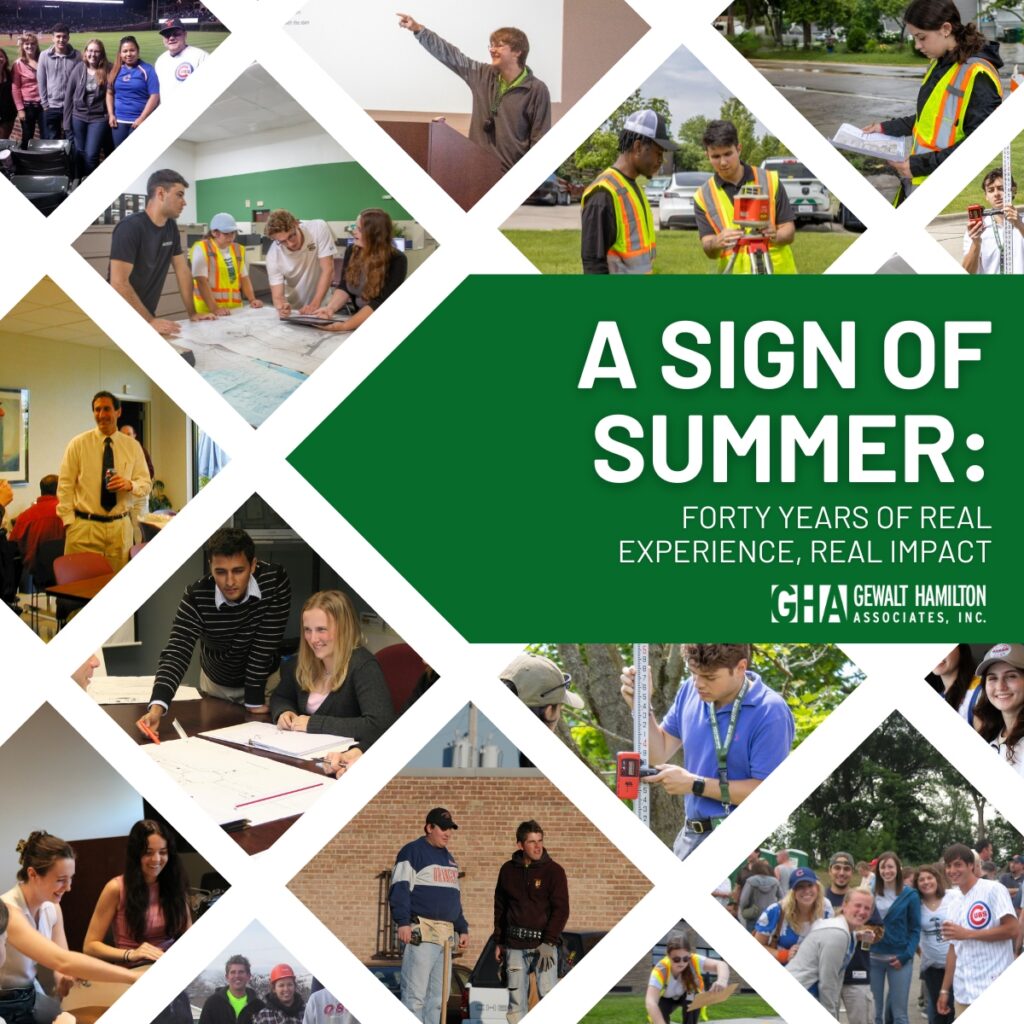
Every year around May, a familiar shift begins at GHA. It’s not something marked on the calendar, but it’s unmistakable. The office begins to hum in a different way, and the presence of new voices signals the arrival of a long-running tradition. The summer interns are here, and the internship program has begun.
“When the interns arrive, you can feel the excitement pick up,” said HR Specialist Hannah Domanski. “They bring fresh perspectives and enthusiasm, and it’s inspiring to see how quickly they become part of the team.”
In 2025, GHA’s Summer Internship Program marks forty years. What began as a single student gaining summer experience has grown into a defining part of the company’s identity. In 1985, the internship program welcomed its very first participant, Mike Shrake. That one summer opportunity became the beginning of a career that would eventually lead him to serve as GHA’s CEO, a testament to how impactful even one summer can be. His story continues to resonate as a model of what’s possible when real responsibility is paired with real opportunity.
“Mike set the tone for what this program could be,” said Don Matthews, P.E., CFM, Vice President and Healthcare Market Lead, who became the company’s second intern in 1986. “Even with the program so new, I could see from what he had done the year before that interns were trusted to take on real work,” he said.
Reflecting on that experience, he added, “That summer confirmed for me that civil engineering was where I wanted to be. My first year I oversaw two parking lot reconstruction projects, had to approve pay requests, and handle unforeseen issues in the field. That kind of trust changes how you see your career.”
Of course, Matthews still remembers his very first day. He showed up early in a hockey jacket, which sparked a conversation with GHA Co‑Founder Bob Hamilton about the sport. “Everyone was so approachable,” he said. “Mike Shrake took me under his wing, Bob and Dave Gewalt were right there if I needed them, and the drafting tech even gave me a crash course on using ink pens….which felt like high-tech stuff to me at the time.”
The experience made a lasting impression. “It was before cell phones, so if there was an issue on site, you drove to the 7-11 to call the office from a payphone,” Matthews said, laughing. “But you solved problems, and you learned to trust yourself.” That trust ultimately led to a fulltime offer before graduation, taking pressure off his senior year. “I didn’t have to think long before saying yes.”
Today, seeing the program forty years later is especially rewarding for him. “I can relate to what these students are feeling. I like giving them responsibility, seeing them figure things out. And its full circle for me because my daughter Sarah is now doing her second summer as an intern. That makes me proud of how far this program has come.”
The Early Years: Hands-On from the Start
From the beginning, the internship program was rooted in action. Interns weren’t there to observe. They were expected to contribute, and they did so alongside full-time engineers who treated them like future peers. That approach stood out at the time and continues to define the program today.
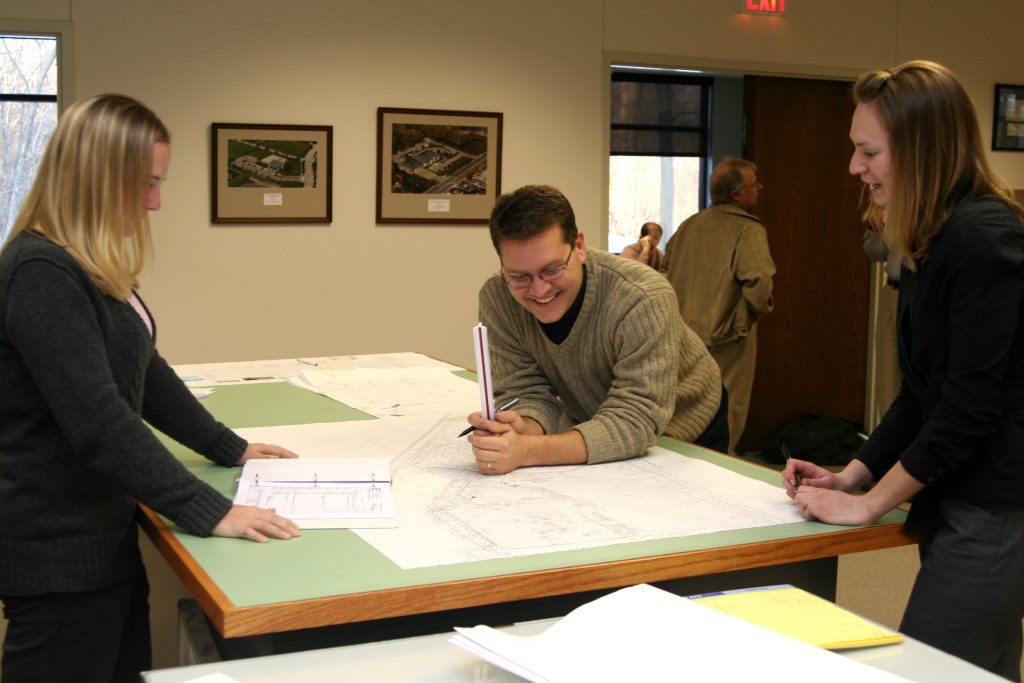
Tom Rychlik, P.E., Market Lead – Parks & Recreation
“I came in dressed for an office job and ended up in a sanitary manhole that first day,” said Tom Rychlik, P.E., Market Lead – Parks & Recreation, laughing. “That’s when it hit me, this isn’t just an office job. You see every side of a project, from the drawings to the finished product in the field, and that’s a big reason why the program works so well and why it’s so successful.”
For Dan Brinkman, P.E., PTOE, now a Senior Project Manager – Phase I & Traffic Studies, that lesson came from long summer days out in the field. “Surveying in the summertime was my favorite part of being an intern,” he said. “It gave me an appreciation for how the data we collect turns into designs and, eventually, into built projects. There’s no better way to understand the process than seeing it from the ground up.”
“You weren’t watching from the corner of the room,” Matthews recalled. “You were doing the work. The expectation was clear. If you didn’t know something, ask. And people were always willing to make time for you.”
That balance between support and independence became one of the most enduring features of the program. By the early 2000s, interns were taking on significant responsibility, including major construction and infrastructure projects. One of those interns was Lucas Deferville, now Assistant Director of Construction and Survey, who joined the program in 2002 and returned each summer through 2004 before joining GHA full-time. He recalled being thrown into fieldwork right away and learning quickly just how much trust was placed in him.
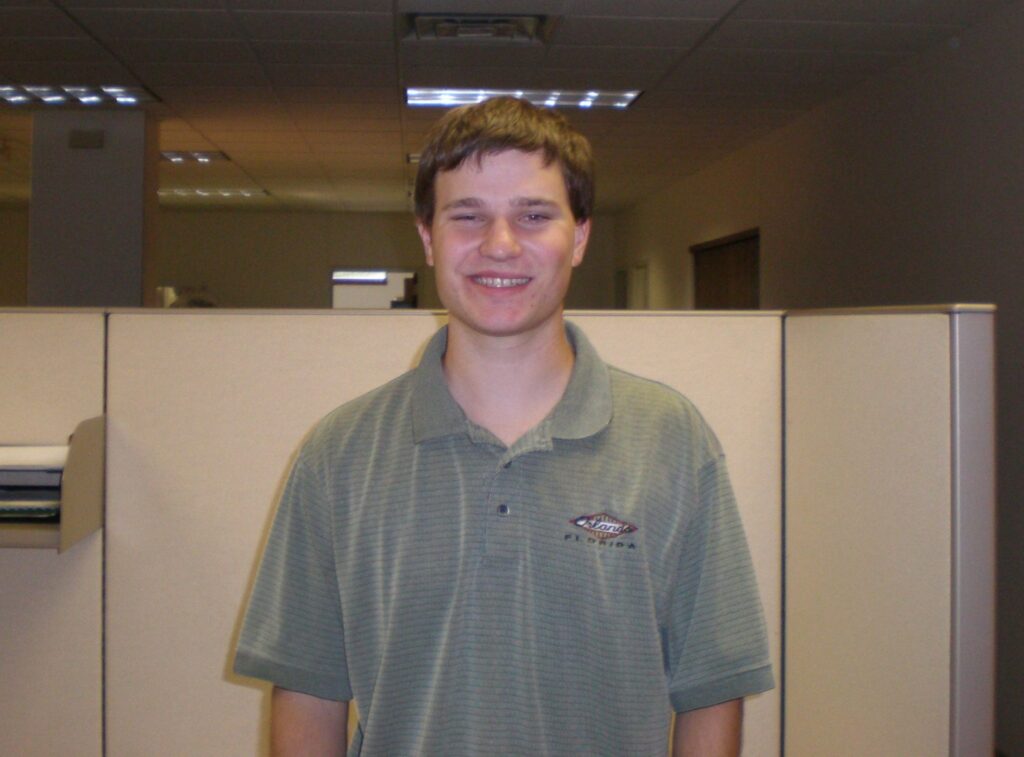
Ross Haseman, P.E., PTOE, Senior Signal Systems Engineer
“I remember managing a federally funded signal and interconnect project during my third summer,” Deferville said. “It was worth about two and a half million dollars, and it hit me how much trust they were placing in someone still early in their career. That really stuck with me. But the thing is, I wasn’t on my own. I had support when I needed it. It made me feel like I belonged.”
That trust resonated with other interns as well. Ross Haseman, P.E., PTOE, now a Senior Signal Systems Engineer, said the defining feature for him was how much responsibility he was given. “I was an RE on a project, out there directing the contractor, adjusting stakes and plans, and talking with residents,” he said. “The company and our clients trusted me to make decisions. A friend at another company said he had to run everything by seven different supervisors. He didn’t feel connected to the work, but I did.”
Marketing Coordinator Caylie Chattin experienced that same trust in a different setting when she helped represent GHA at her school’s career fair during her summer as an intern. “I knew what it was like to be on the other side of the booth, nervous, trying to stand out to employers,” she said. “So getting to flip roles and speak from personal experience as an intern was really cool. I was able to answer questions and support my peers from the employer’s side this time.”
Building Structure, One Class at a Time
In the mid-2000s, the program continued to grow rapidly. Carissa Smith, P.E., now a Service Lead – Village Engineering, interned from 2003 to 2005. When she later took on the role of internship program coordinator, she saw opportunities to formalize the experience for future classes.
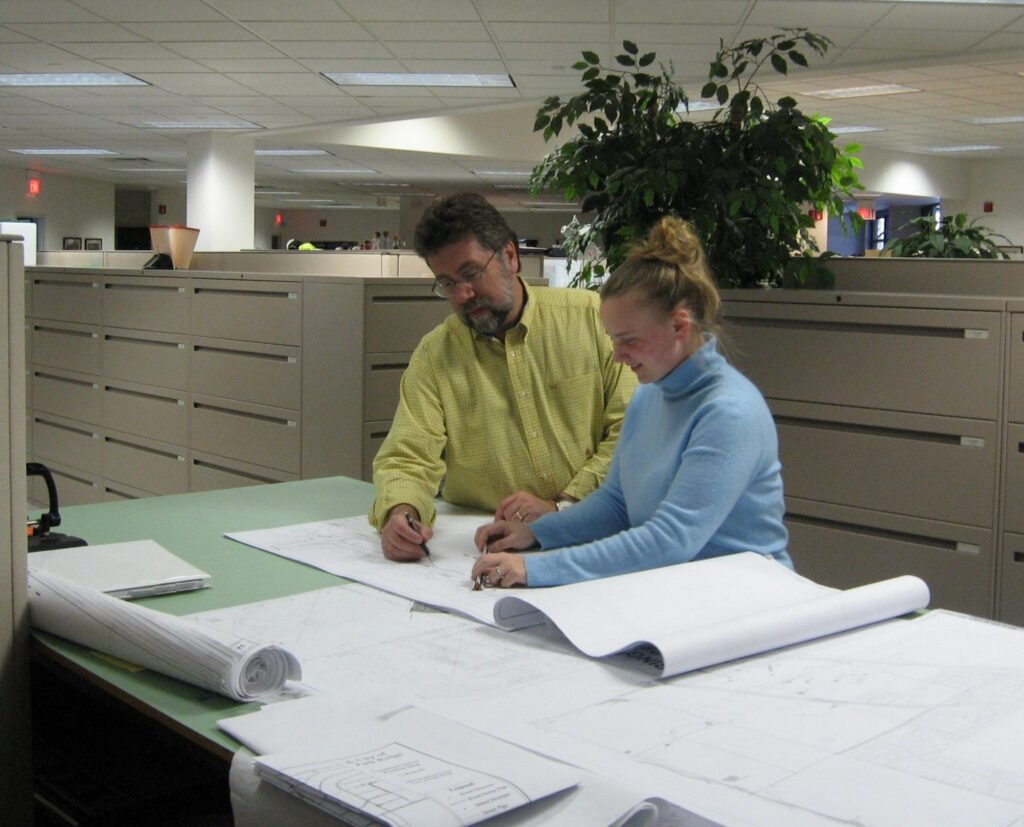
Carissa Smith, P.E., Service Lead – Village Engineering
“A lot of the pieces were already in place, and I wanted to help bring them together in a more intentional way,” Smith said. “We introduced CAD classes, EOPC training, storm sewer design, and a formalized onboarding process to give interns a clear picture of what they’d experience. It wasn’t just about filling time; it was about showing them how to grow into full-time roles.”
Brinkman, who interned from 1994 to 1996, agreed. “The ingredients have been there since day one: committed mentors, challenging assignments, and a team that wants you to succeed,” he said. “Adding formal training simply organized what we were already doing and helped every class of interns hit the ground running.”
Growth brought more interns and, with them, plenty of first-day memories. Smith remembered how exciting it was to see the program attract new faces each summer, each one eager to dive in and learn. One of her favorites came from her very first year as coordinator, when she welcomed Brian Wesolowski, P.E., CFM, now Director of Civil Design.
“He walked in wearing a lime green polo shirt that was several sizes too big,” she said, laughing at the memory. “It’s funny the things that stick with you, and that shirt was unforgettable.”
When Brian heard the story, he laughed and admitted it was probably true if Carissa remembered it. “I was just excited to be there,” he said.
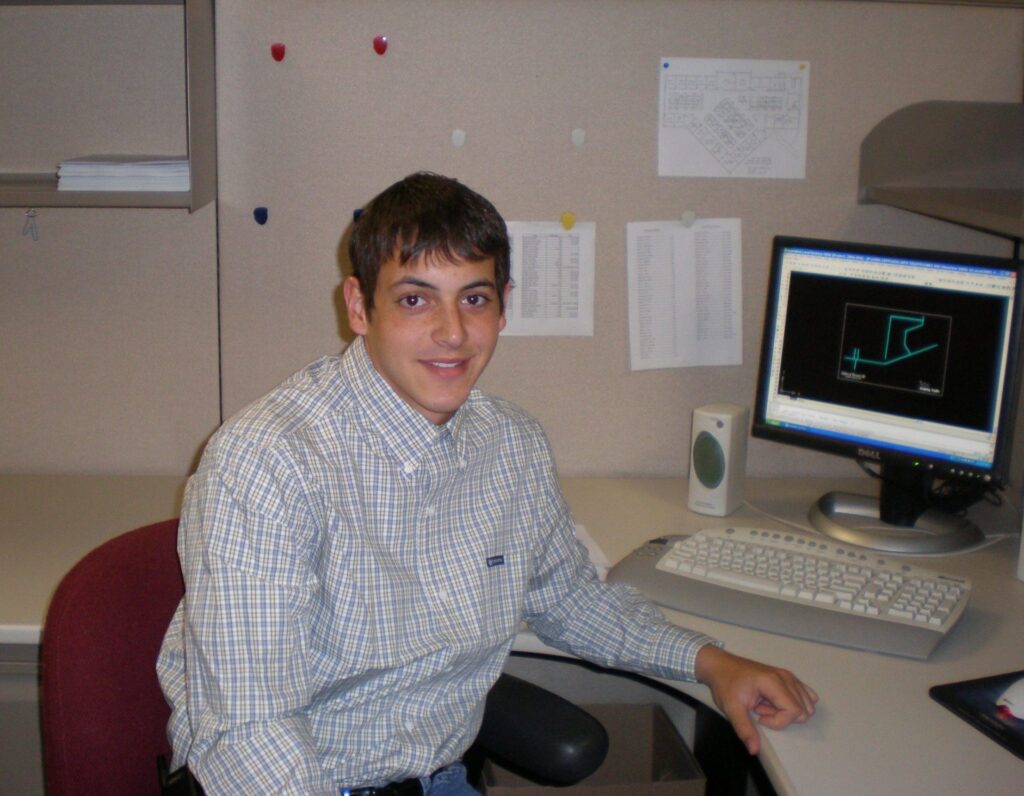
Brian Wesolowski, P.E., CFM, Director of Civil Design
Wesolowski’s own experience as an intern set the stage for the role he would later play in shaping the program for others. “Those summers at GHA felt like a full year of experience,” he said. “You learned how to work in the field, how to manage a schedule, how to talk to clients. It gave me a head start when I graduated because I already knew what it meant to be part of a professional team.”
That experience paid off quickly. By the time Wesolowski entered his senior year of college, he already had a full-time offer waiting for him. “That made a huge difference,” he said. “It took a lot of stress off my shoulders and let me focus on finishing school knowing I already had a job lined up, not to mention I was excited about the opportunity itself.”
For Cesar Aguirre E.I., who interned in 2021 before joining GHA full-time the following year, the feeling was similar. “I will always remember receiving my full-time offer at the end of the internship,” he said. “It confirmed that I was already part of the team and that the work I had done that summer mattered. It took the pressure off my last year of school and made me even more excited to come back.”
Wesolowski’s path eventually led him back to the internship program, this time as the program’s coordinator. As coordinator, he built on what he had valued most as an intern: clear expectations and meaningful responsibility. He introduced weekly check-ins with project managers to strengthen feedback loops and ensure interns had clarity about their work and schedules. His focus was on helping them develop the same skills that had shaped his own career – communication, accountability, and confidence.
Looking back, Wesolowski said those summers changed how he viewed his profession. “It’s one thing to sit in a classroom and learn theory,” he said, “but when you’re out in the field or presenting your work to a client, you realize you’re part of something real. That kind of experience gives you confidence, and that’s what I wanted to give to the interns coming after me.”
Rychlik echoed that sentiment when reflecting on his own internship experience. “Stick your hand up and volunteer,” he said. “People will notice your ambition, and you’ll learn not only what you like, but also what you don’t like, which is just as valuable. An internship is just as much about figuring out where you want to be as it is about showing what you can do.”
Expanding the Program: New Divisions, New Disciplines
As GHA continued to grow, so did the internship program. In time, leadership of the program passed to Anika Moore, now GHA’s Chief People Officer and Director of Administration. Under her guidance as Head of HR, the program broadened its reach through expanded recruiting and a renewed focus on culture. “One of the things I always told interns was, ‘You are not here just to shadow someone. You are part of the team from day one,’” Anika said. “Seeing their work included in real projects helps them grow quickly and builds confidence.”

Tori Vela, Talent Acquisition Specialist
That focus on meaningful work became a unifying theme across the company, setting the stage for future growth. “Even in just the last few years, the program has grown so much,” said Aguirre. “When I interned, it was engineering positions. Now we have interns in GIS, HR, marketing, survey, and landscape architecture. It shows how much the company has expanded and how many different career paths are available here.”
That evolution opened the door for students like Tori Vela, who interned with the HR team and now works full-time as a Talent Acquisition Specialist. “I had friends who spent their internships making copies and getting coffee,” she said. “At GHA, I was sitting in on onboarding, working on recruitment, even helping with a transition between HR Information Systems. That was a major change for the company, and the fact that they brought me into those conversations meant a lot. I was still in school, but they trusted me with real tasks.”
Vela said that trust made a lasting impression, and it shaped how she approaches interns now. “I think back to what helped me feel included, what helped me learn. That’s the experience I want to give to interns now that I’m on the other side.”
Culture, Camaraderie, and Continuity
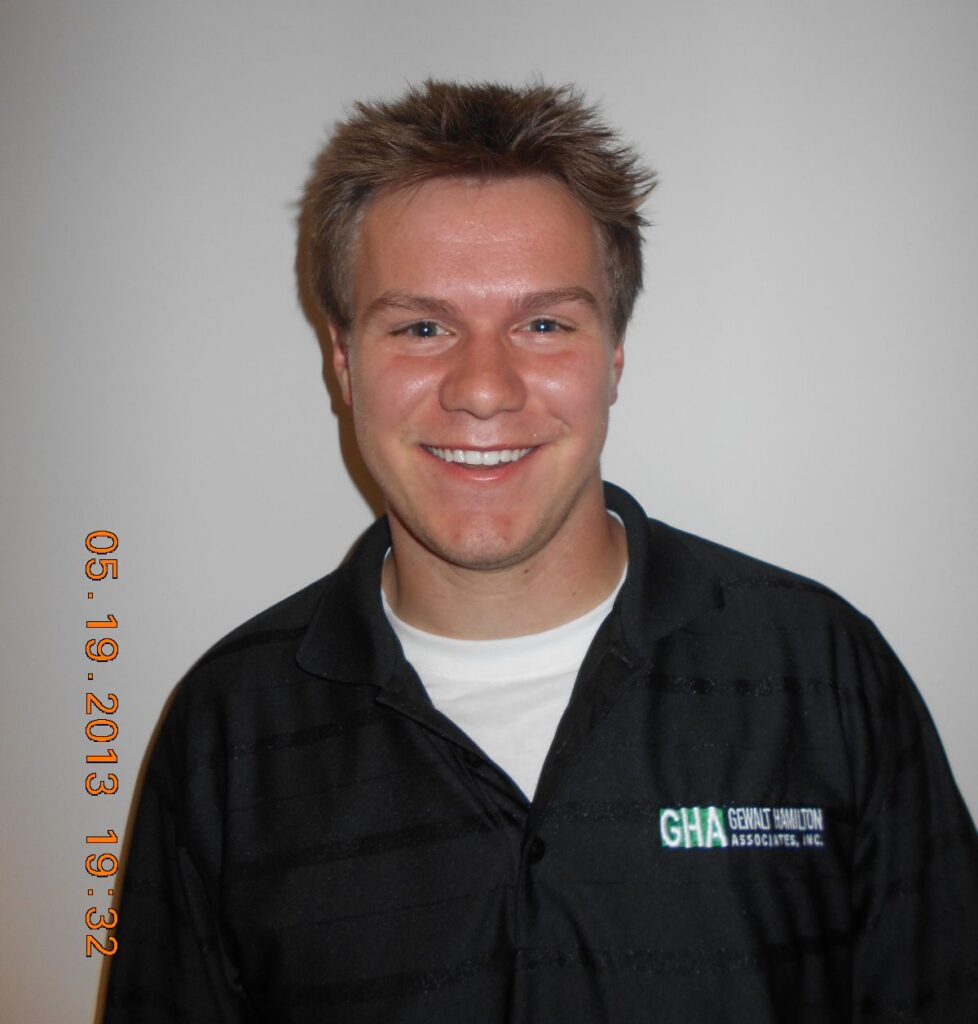
Peter Lind, P.E., Service Lead – Civil Design
While the technical experience has always been strong, many former interns describe the relationships they built as equally important. Peter Lind, P.E., now a Service Lead in the Civil Design Division, spent four summers as an intern starting in 2011.
“That summer we all became really close,” Lind said. “We helped each other, we asked questions, and we became friends. Back then we were crammed into the ‘intern room.’” He shook his head with a grin. “Now it’s my office, and there’s no way today’s intern classes would all fit in there.”
Rychlik has seen the same growth firsthand. “When I started, we were just a handful of interns,” he said. “Now it’s a full cohort every summer, and a lot of them come back for another internship or full-time. That says a lot about the culture and the opportunity here.”
Lind credits his time as both an intern and an intern coordinator with shaping how he evaluates new talent today. When interviewing potential full-time engineers for his squad, he draws on those early lessons. “That experience taught me how to look for someone’s potential, not just what’s on their resume,” he said. “It helps me see how they might grow once they are part of the team.”
Those long-term trajectories are what make the program more than just a summer job. For former intern Jarett Giesey, now a Data Collection Service Lead, the progression feels seamless.
“Interns plug into the culture quickly. They learn how we do things. When they come back full-time, they’re already part of the team,” he said. “It’s kind of wild to think it’s been forty years, but the program still feels fresh every summer when a new group comes in ready to learn.”
What the Program Looks Like Today
Interns now participate in CAD standards training, erosion control budgeting, construction site visits, and survey equipment demonstrations. HR interns shadow onboarding and support recruiting strategy. GIS interns learn about asset management and data collection. Every class presents a final project at the end of the summer, and lunch-and-learns with division leaders give exposure to the broader company.
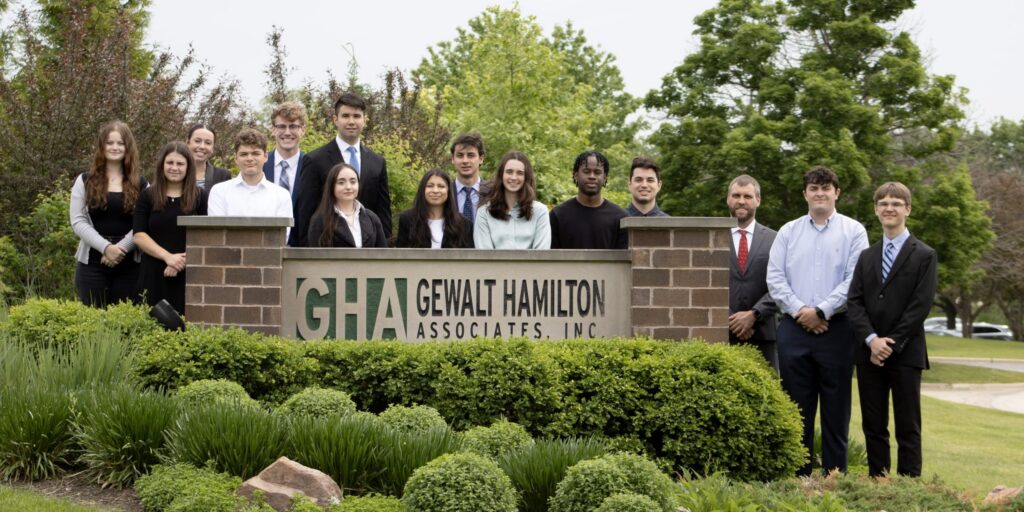
The 2024 Intern Class – the largest in company history, with 15 interns
The work remains real, and the expectations are clear. Interns are not only preparing for jobs, they are testing what it means to contribute at a professional level.
“Three months here can change everything,” Wesolowski said. “It did for me.”
Smith agreed. “The learning curve is steep, but the support is there. And when you see someone come back as a full-time hire, it makes you proud.”
Domanski noted that in 2024, every intern who received a job offer accepted it.
“That tells me we’re doing something right,” she said. “They’re not just learning. They want to stay.”
Legacy and Looking Forward
The numbers are impressive. Forty years. Hundreds of interns. Thirty-five current full-time staff who started their careers in the program. A former intern who became CEO. Coordinators who became mentors. Interns who became leaders.
But for those who went through it, the meaning goes deeper.
“It gave me confidence,” said Wesolowski. “It gave me clarity. And now I get to offer that to someone else.”
Lind echoed that sentiment, saying his experience created lasting friendships and a foundation for his career. “It gave me a network and the confidence to grow here,” he said.
For Matthews, the reflection is even more personal. “I think back to how little I knew when I started,” he said. “Now I get to see interns have those same light‑bulb moments, and it makes me proud of what this program has become.”
If you, or someone you know, wants to turn curiosity into real-world impact, explore next summer’s internship opportunities at https://ghaway.com/careers/career-paths/internships