- Understanding Roundabouts and Their Growing Role in Transportation
- Challenges in Data Collection at Roundabouts
- Methods for Collecting Traffic Data at Roundabouts
- Best Practices for Data Collection
- The Future of Traffic Data Collection at Roundabouts
- GHA’s Expertise in Roundabout Traffic Data Collection
- Tailored Data Collection Strategies
- Advanced Video Analytics
- Comprehensive Analysis for Informed Decisions
- End-to-End Support for Municipalities and Agencies
- The Road Ahead
Understanding Roundabouts and Their Growing Role in Transportation
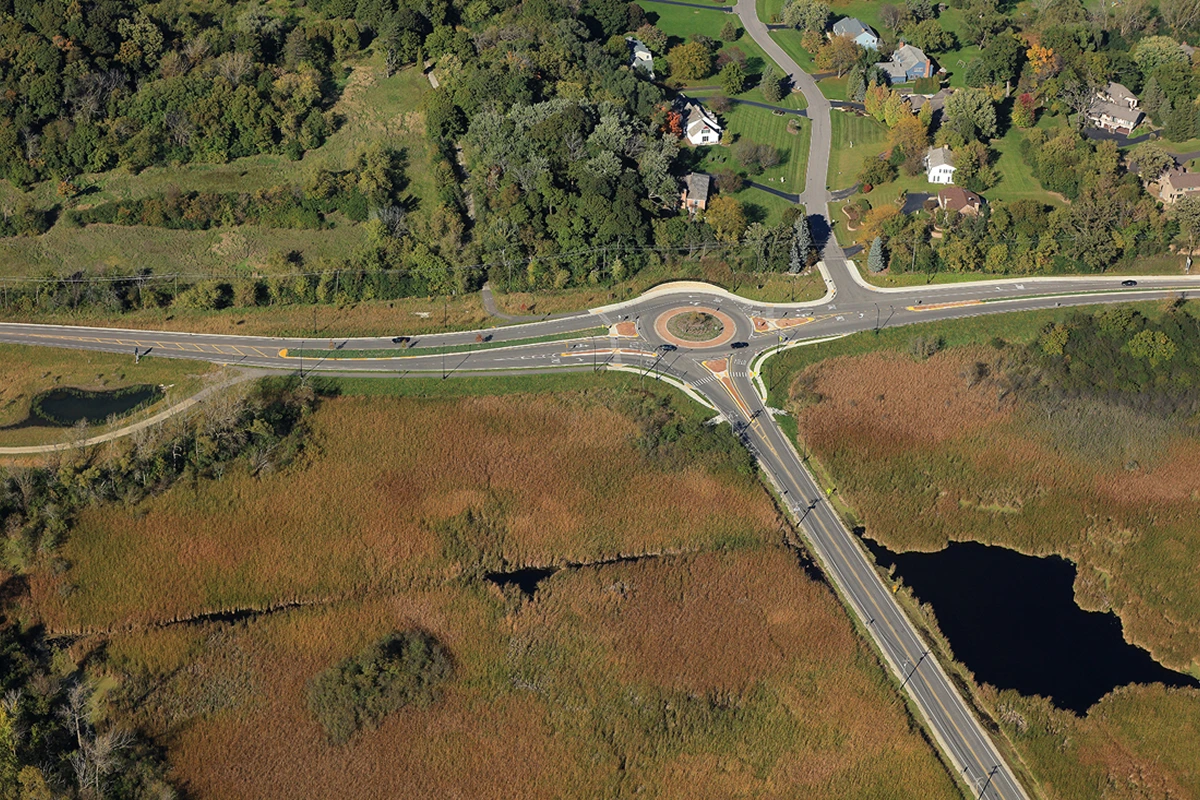
Modern roadway design increasingly incorporates roundabouts to optimize performance and improve circulation. By reducing conflict points and allowing continuous movement, they improve efficiency while decreasing the potential of severe crashes. Unlike traditional, signalized intersections, where vehicles stop at lights or signs before proceeding, roundabouts promote steady flow, reducing delays and congestion.
With approximately 9,000 modern roundabouts in use across the United States, the demand for accurate traffic data collection continues to grow. Understanding how vehicles, cyclists, and pedestrians navigate roundabouts is critical for assessing performance, identifying design improvements, and confirming that these intersections function as intended. However, gathering reliable data in a roundabout setting presents unique challenges, requiring specialized methods suited to their distinct traffic patterns.
Challenges in Data Collection at Roundabouts
Unlike standard intersections, where data collection often focuses on volume counts and signal timing, roundabouts require a more detailed strategy. Vehicles enter from multiple approaches at varying speeds, yield to circulating traffic, and exit at different points. This complexity makes traditional counting methods, such as manual observation or pneumatic tube counters, less effective in capturing movement patterns.
Strategic observer or equipment placement is essential for effective data collection and requires careful coordination. At a signalized intersection, a single vantage point often captures all key movements. This becomes more complex at roundabouts, where multiple approaches must be monitored simultaneously, often requiring multiple observers or cameras. Large, multi-lane roundabouts add another layer of complexity, as vehicles shift positions while circulating, making movement tracking a more intricate process.
These challenges become even more pronounced when data collection needs to be sustained over time, as roundabouts require continuous monitoring to capture variations in traffic patterns throughout the day, week, or season. While manual counting may be effective for short-term studies at low-volume roundabouts, it quickly becomes impractical for larger-scale or long-term data collection. Managing multiple approaches, lane shifts, and vehicle interactions over extended periods requires a more efficient solution. Video-based methods offer a scalable alternative, allowing for longer observation windows and greater accuracy. Still, proper camera placement, resolution, and processing techniques remain a fundamental factor in capturing the full range of movements and obtaining reliable results.
Methods for Collecting Traffic Data at Roundabouts
Several methods exist for gathering roundabout traffic data, each with distinct strengths and limitations depending on site conditions.
Manual Counts
Manual traffic counting remains a widely used method, particularly for smaller roundabouts or short-term studies. Observers stationed around the roundabout record vehicle movements, including entry and exit points, yielding behavior, and lane choices. While this technique allows for real-time verification, it is highly dependent on observer attention and accuracy. At busy roundabouts, the need to track multiple vehicles simultaneously increases the likelihood of inconsistencies. Due to the labor-intensive nature of manual counts, they are not practical for long-term data collection.
Pneumatic Tubes and Plate Counters
For basic volume counts, pneumatic tubes and plate counters provide a low-cost solution. These devices are placed across entry and exit lanes to record the number of vehicles passing over them. Although effective for measuring total vehicle counts, they do not track turning movements—essential data for roundabout performance assessments. Without information on how vehicles circulate and exit, these methods offer only a partial view of traffic operations.
Video-Based Data Collection
Video technology has become the preferred method for roundabout data collection due to its ability to provide detailed, verifiable footage. High-definition cameras are placed at strategic points to capture vehicle movements continuously, allowing for post-processing and analysis. This technique reduces human error and provides a permanent record that can be reviewed multiple times for accuracy.
Even with these advancements, effective camera placement is fundamental. A single-camera setup is typically limited to roundabouts with diameters of less than 200 feet, as larger roundabouts require multiple cameras to cover all approaches. Each camera must be positioned to track vehicles entering the roundabout as well as those circulating and exiting. In addition to strategic placement, lighting and weather conditions must be considered, as poor visibility can affect data quality.
Best Practices for Data Collection
A well-structured process is necessary to maintain accuracy in data collection, particularly when relying on manual counts. Observer placement plays a significant role in capturing complete movement data, requiring each observer to focus on a designated entry point while coordinating with others. Standardizing collection intervals and maintaining consistency in observation techniques help reduce errors and improve data reliability.
For video-based work, camera placement should provide overlapping coverage to maximize visibility of all movements. Higher vantage points, such as poles or elevated structures, improve visibility and reduce the number of cameras required. In some cases, permanent camera installations prove useful for ongoing monitoring, particularly at high-volume roundabouts.
Processing collected data is just as important as gathering it. High-resolution video allows for detailed post-analysis, enabling researchers to verify movement patterns, classify vehicles, and assess yielding behaviors. As technology continues to evolve, video analytics software is becoming more sophisticated, using automation and AI-driven capabilities to streamline data processing. These advancements are improving efficiency by reducing manual review, creating more accurate and scalable traffic analysis.
The Future of Traffic Data Collection at Roundabouts
As AI-driven video analytics becomes more advanced, it further enhances roundabout data processing by automating vehicle tracking and reducing manual review. This technology can analyze footage in real time, automatically detecting and classifying vehicles, tracking their movements, and identifying traffic patterns without human intervention. By significantly reducing the time and labor required for data processing, AI improves efficiency while enhancing the accuracy of traffic studies, making large-scale data collection more practical than ever.
Even with AI optimizing video methods, visibility remains a potential issue at larger roundabouts—an area where tethered drones offer a valuable solution. Unlike stationary cameras, drones can be positioned to capture a wider field of view, providing a clearer and more complete perspective of roundabout movements from above. This flexibility allows for better tracking of vehicle paths, minimizing blind spots and reducing the number of cameras needed to monitor complex intersections. By expanding coverage and improving data accuracy, tethered drones enhance the ability to analyze traffic flow in ways that traditional ground-based equipment cannot.
With their role already established in traffic monitoring, permanent camera installations are increasingly being used in urban areas for long-term assessments. When integrated with real-time processing software, fixed monitoring equipment allow transportation agencies to continuously evaluate roundabout performance and adjust operations based on evolving traffic patterns. By providing consistent, high-quality data, permanent installations support proactive decision-making and long-term planning.
GHA’s Expertise in Roundabout Traffic Data Collection
Accurate traffic data is essential for understanding roundabout performance, and Gewalt Hamilton Associates’ (GHA) Traffic Data Collection Division delivers data collection and analysis services that support effective, data-driven transportation planning. Our team applies industry best practices and leverages the latest technology to collect, process, and analyze traffic data, helping clients improve roadway efficiency, traffic flow, and transportation planning.
Tailored Data Collection Strategies
Every roundabout presents distinct design variables, from varied lane configurations to fluctuations in traffic volume and surrounding land use. GHA’s approach is site-specific, adapting methods to meet the needs of each location. Our team conducts a thorough assessment of the roundabout before selecting the most effective data collection strategy, considering factors such as visibility, seasonal variations, and pedestrian activity. Regardless of the method – manual counts, video analytics, or automated data collection tools – we tailor our approach to fit project goals, timeframe, and budget.
Advanced Video Analytics
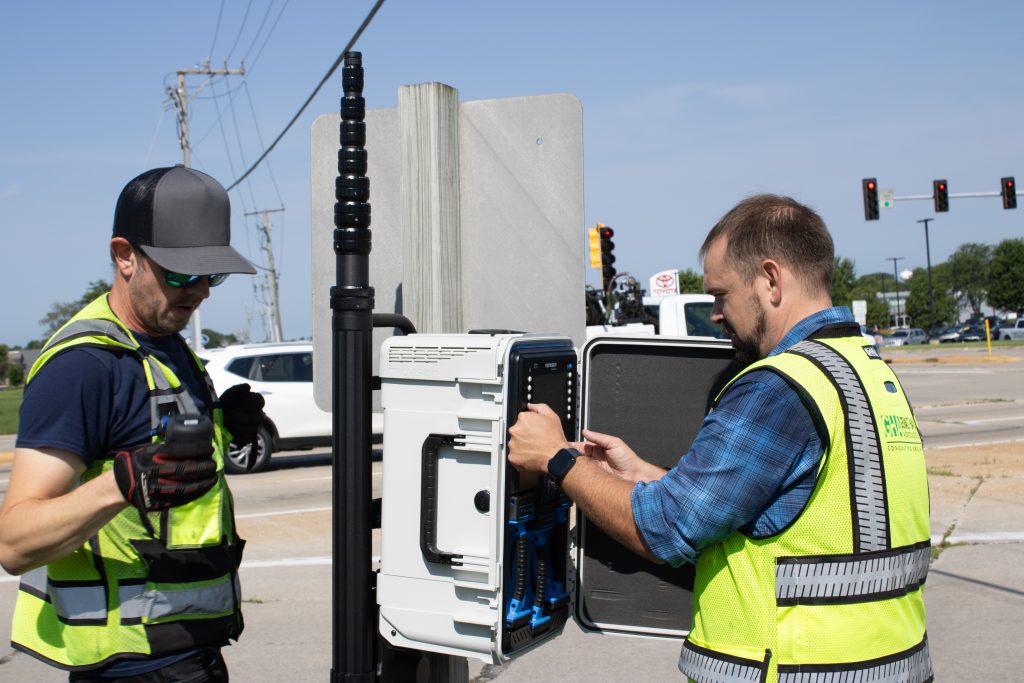
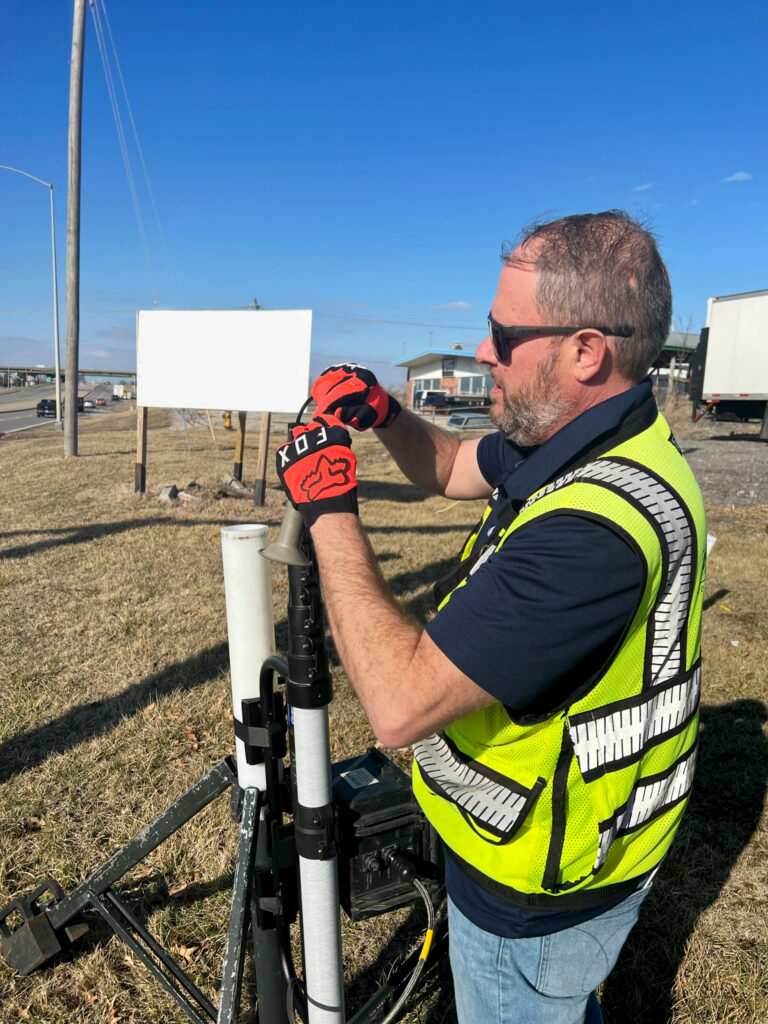
GHA utilizes state-of-the-art video collection systems, deploying high-resolution cameras positioned for maximum coverage. Strategically placed equipment captures complete vehicle and pedestrian movements, ensuring that all entry, circulation, and exit points are properly documented. This data is then processed using industry-leading software to confirm accuracy and reliability. Advanced data analysis methods, including AI-driven solutions, help automate vehicle classification, refine movement tracking, and streamline review time, resulting in more efficient and detailed insights.
Comprehensive Analysis for Informed Decisions
Beyond data collection, GHA provides detailed traffic analysis, helping municipalities and agencies translate raw data into actionable insights. Our work extends beyond roundabouts, integrating with broader transportation planning efforts, roadway design, and impact studies to support system-wide improvements. By incorporating insights from our Transportation Services Division, GHA strengthens its approach to traffic data collection and analysis, ensuring that findings align with regional and corridor-level planning needs.
Our expertise supports:
-
- Assessing roundabout capacity and identifying potential congestion points to align intersections with roadway and highway performance goals.
- Evaluating how vehicle and pedestrian movements interact, providing data to support multimodal transportation planning and accessibility improvements.
- Identifying operational inefficiencies and recommending improvements that align with corridor studies, traffic signal timing, and network optimization strategies.
- Analyzing trends over time to support long-term infrastructure planning by integrating traffic flow data with roadway and highway design considerations.
- Planning for future traffic signal adjustments, lane modifications, or roadway enhancements to maintain consistency with broader traffic impact studies and transportation system improvements.
Our team provides the data needed to improve efficiency, optimize roadway functionality, and support long-term planning, whether analyzing a single roundabout or assessing its role within a larger transportation network.
End-to-End Support for Municipalities and Agencies
From data collection to implementation, GHA provides full-service expertise throughout every stage of a project. We work closely with stakeholders, including municipal planners, engineers, and transportation officials, to collect, evaluate, and apply traffic data in ways that support informed decision-making. Our recommendations are shaped by a deep understanding of operational challenges, funding considerations, and future infrastructure needs.
GHA’s experience in traffic data collection extends beyond individual studies; we also assist agencies, organizations, and developers in integrating findings into broader transportation planning efforts. Whether refining traffic signal operations, assessing roadway capacity, or planning for multimodal accommodations, we help clients develop targeted, data-driven solutions for transportation networks.
The Road Ahead
As roundabouts continue to gain momentum in roadway design, their role in improving traffic flow and intersection efficiency is expanding across a variety of settings. However, collecting and analyzing traffic data in these locations requires specialized expertise and a strategic approach.
Technology is reshaping data collection, with AI-driven processing, real-time analytics, and permanent monitoring systems creating new opportunities for transportation planning. GHA is committed to staying at the forefront of these advancements, applying innovative solutions that deliver precise, reliable data to support stronger infrastructure decisions.
For municipalities and transportation agencies planning for more efficient roundabouts, GHA offers the expertise, technology, and insight needed to apply data to roadway improvements. Contact us today to learn how we can assist with all your traffic data collection needs.