Across many communities, sanitary sewer systems are aging faster than they’re being repaired. Leaks, cross-connections, and unsealed structures often go undetected, causing costly treatment of Inflow and Infiltration (I and I), accelerated wear on infrastructure, and a growing need for actionable data. As part of a broader approach to proactive infrastructure maintenance, GHA’s Public Works Operations (PWO) Division now offers smoke testing to help municipalities identify hidden system defects and plan improvements more effectively.
Smoke testing provides municipalities with a direct way to identify system weaknesses that can’t be seen from the surface. It’s a service that complements other PWO offerings and gives communities the kind of practical information that can be used for both short-term fixes and long-term planning.
A Practical, Field-Ready Solution
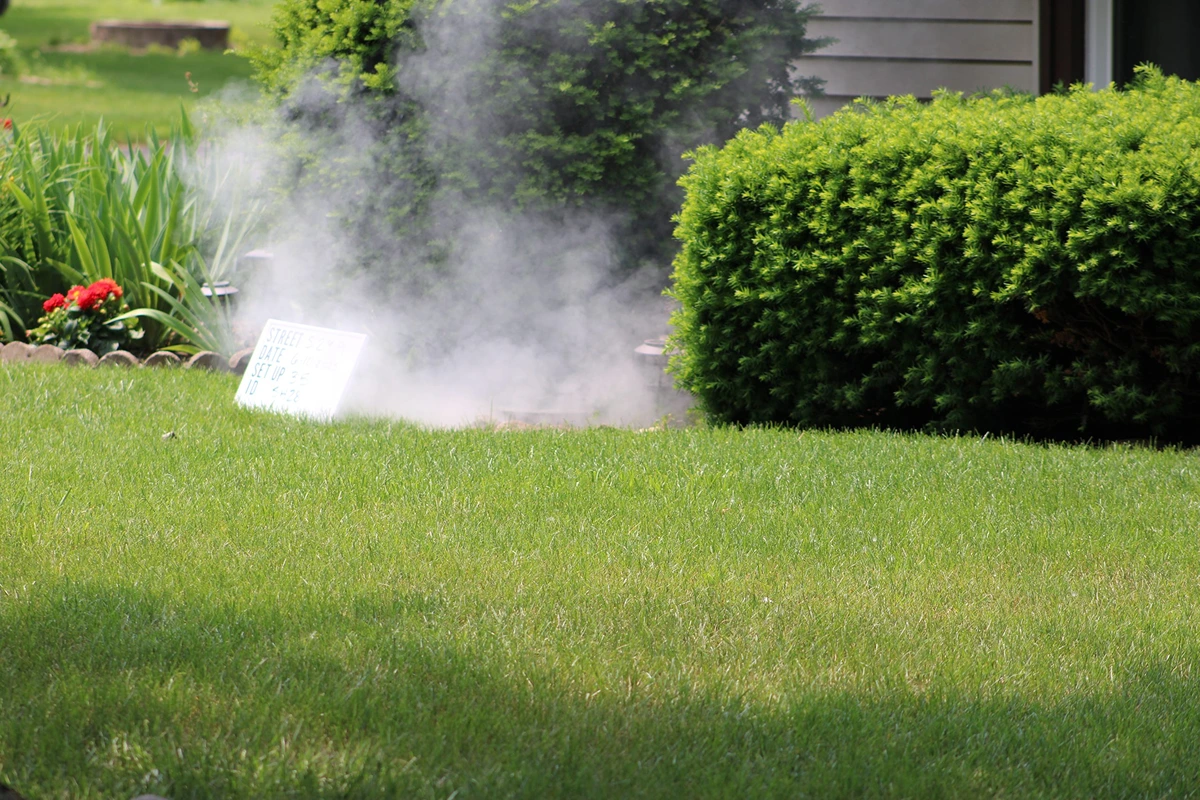
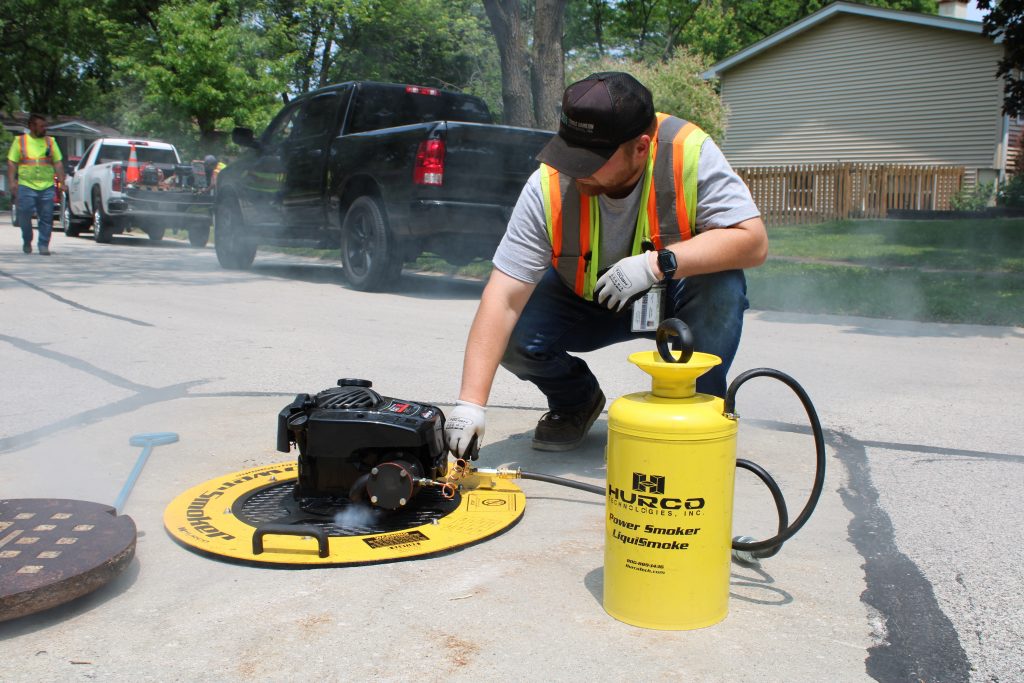
The smoke testing process is straightforward. It starts by isolating and temporarily sealing sections of the sanitary system to create a controlled environment. Crews then inject non-toxic, artificially generated smoke into sections of the sanitary system and observe where it emerges. Ideally, the smoke should exit only through vent stacks and designated access points. When it surfaces in yards, near foundation drains, or from storm inlets, it’s a clear indicator of improper connections, cracks, or breaks in the system.
This type of testing is typically done in dry conditions and performed one basin at a time. It’s non-invasive, safe for residents, and delivers results quickly, often within the same day. According to Shane Hedge, Engineering Technician “It’s one of the fastest and most effective ways to trace inflow and infiltration back to the source. And when you’re in the field, you can immediately verify what you’re seeing and start identifying potential next steps.”
Smoke testing is delivered as a fully managed service by GHA’s PWO Division, minimizing the burden on municipal staff and resources. Our crews arrive with everything required: blowers, safety signage, trained staff, and a coordinated testing plan aligned with the system layout.
Why Smoke Testing Matters
For many municipalities, especially those with older clay or concrete pipes, smoke testing offers more than just inspection. It offers insight. The findings help communities:
- Detect and eliminate clean water sources improperly entering the sanitary system
- Reduce wastewater treatment costs driven by unnecessary flows
- Identify public and private sector defects for targeted rehabilitation
- Support capital improvement plans and grant applications with real field data
“This isn’t just about finding problems,” said Matt Barlett, Engineering Technician. “It’s about giving communities better insight into what’s happening underground. They’re often dealing with capacity issues, compliance questions, or budget constraints, and this gives them something solid to work with.”
The results can also be integrated into GIS utility data, linking smoke testing observations directly to mapped infrastructure. That alignment makes it easier to track repairs, prioritize investments, and keep records current.
In the Field: St. Charles Example
One of the first GHA-led smoke testing efforts is currently underway in the City of St. Charles. The work is focused on two sanitary sewer basins, North Central and Second Place, and is part of a broader sewer evaluation initiative. Testing began earlier this summer, and the PWO Division has been managing both the technical process and coordination with city staff.
In advance of the testing, the PWO team worked with city representatives to plan the testing schedule, define the basin boundaries, and confirm utility conditions. Notifications were distributed to residents, and crews set up clear signage in each neighborhood. From there, it became an organized, field-driven effort to document findings and troubleshoot issues in real time.
“We’ve been on site every day,” said Adam Potter, Engineering Technician. “It’s hands-on work, and we’re working closely with the city’s engineering and public works departments to track what we’re finding and how it connects back to the system as a whole.”
In some locations, the smoke revealed issues like uncapped cleanouts or improper sump pump discharges. Other observations are being reviewed further to determine whether additional investigation may be needed. All findings are being documented and shared with the city in a format that supports follow-up action and planning.
Enhancing Inspection, Mapping, and Maintenance Efforts
Across utility and infrastructure projects, smoke testing is more than just a new tool. It’s a practical solution that can support larger initiatives. It fits well into sanitary sewer evaluation surveys (SSES), asset management efforts, and utility mapping projects. Because the service is housed within the PWO Division, it can be deployed quickly and scaled to meet a variety of project types and community needs.
“Adding smoke testing to our services is a natural fit,” said Mike Grinnell, Director of PWO. “It builds on our inspection work and complements everything we’re already doing with manhole scanning and flow monitoring. And it opens the door for increased collaboration.”
Whether it’s used to confirm suspected inflow sources or to support a long-term capital improvement plan, smoke testing provides value that’s immediate, visual, and tied directly to the infrastructure on the ground.
Looking Ahead
As more communities look for cost-effective ways to manage aging systems and meet regulatory expectations, smoke testing offers a path forward. It is grounded in observation, supported by data, and executed by field professionals who understand municipal systems. From sanitary studies to GIS enhancements, smoke testing brings a focused, field-based perspective that leads to clearer answers and better solutions for the communities we serve.