 Understanding how a water system performs in real-world conditions requires more than just maps and models. Hydrant performance, pressure fluctuations, and unaccounted-for water loss are all part of a broader picture that’s often hard to see without field-level insight. To help fill that gap, GHA’s Public Works Operations (PWO) Division offers hydrant flow testing and leak detection. These tools give communities a clearer view of system conditions and practical data they can act on.
These field-driven tools give communities direct feedback on how their water systems are functioning. Whether identifying low-pressure zones, verifying infrastructure capacity, or detecting unaccounted-for water loss, both services are designed to support real-time understanding and long-term system planning.
Field-Validated and GIS-Connected
Flow testing is one of the most reliable ways to assess a distribution system under real-world conditions. It helps confirm that hydrants deliver the expected volume and pressure. It also reveals bottlenecks or signs of restricted flow. These tests are especially useful when pump station issues or pressure zone imbalances are suspected, offering a proactive option before failures occur.
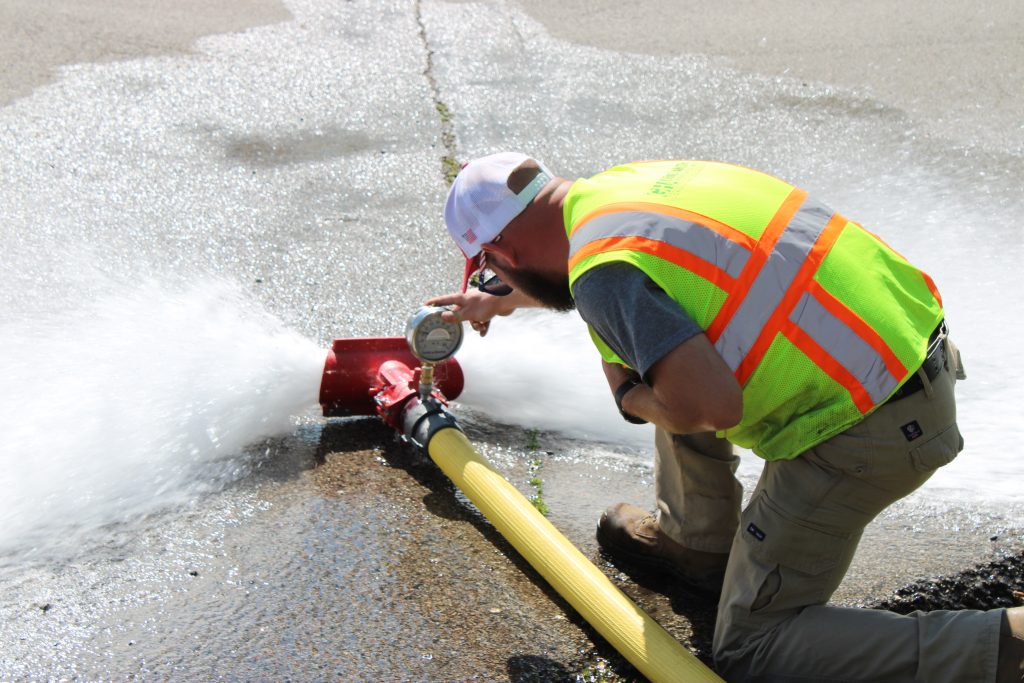
GHA’s flow testing services are delivered directly by the PWO Division, with crews managing each step from set-up to data delivery. In the field, crews use hydrant diffusers equipped with pitot meters to measure flow and document results directly on tablets using GIS-integrated forms. Every test is captured in real time, eliminating manual entry and linking results directly to mapped assets.
“Flow testing gives us a direct window into how the system responds under load,” says Engineering Technician Eric Kaufman “We can record pressures at multiple locations and immediately see where performance isn’t lining up.”
Listening for Losses
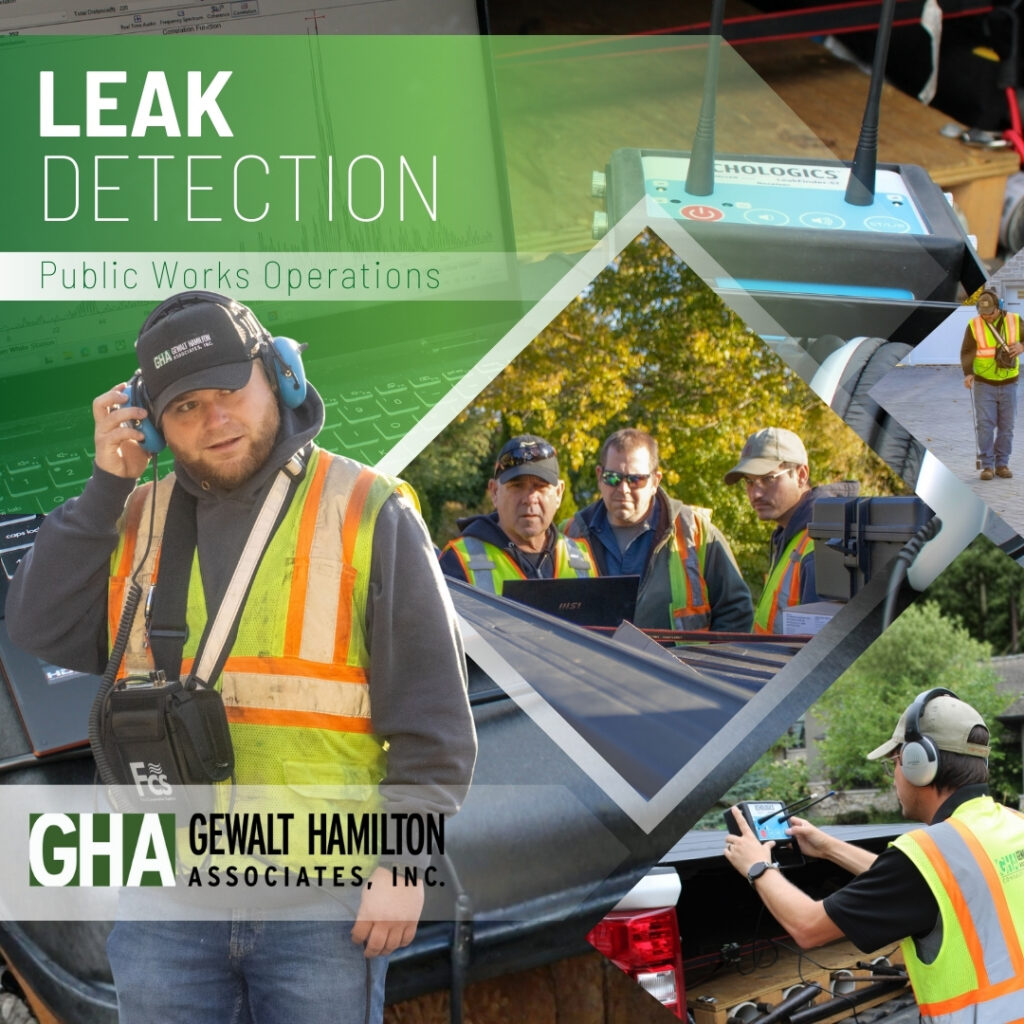
In tandem with flow testing, PWO also provides leak detection services using acoustic sounding equipment. These tools allow technicians to pinpoint leaks with precision, often identifying problem areas before surface symptoms appear. Even subtle variations in sound, like a slight hiss along a water main, can indicate a loss.
“It doesn’t take much. Our equipment is sensitive enough to hear a pin drop if something’s off,” says Eric. “That means we can be exact about where the issue is, which saves time and money for the client.”
Leak detection is particularly important for communities tracking non-revenue water. In Illinois, water systems that experience losses greater than 10% are required to file an IL 2 form with the state and begin a water loss control program. By identifying small leaks early, municipalities can avoid reaching that threshold and defer more costly repairs.

In the Field: The Village of Round Lake Beach
In the Village of Round Lake Beach, the PWO Division provides annual hydrant flow testing to help evaluate system performance across the water distribution network. Crews use GIS-based forms to document pressure readings in the field and processed the results on-site, allowing the Village to receive timely, organized data tied directly to mapped infrastructure. These results provide a clearer view of how the system performs under demand while supporting future planning and maintenance decisions.
In certain areas, leak detection is also performed to investigate potential sources of water loss. Using acoustic sounding equipment, the team can listen for irregularities and identify possible points of concern, helping create a better understanding of system conditions. Together, these services give the Village actionable information without requiring internal resources or equipment.
In the Field: The Village of Bensenville
In the Village of Bensenville, GHA’s PWO Division is currently leading a multi-year hydrant flow testing program. The program provides a structured way to assess hydrant performance and gather data to guide infrastructure planning.
Each year, approximately 400 hydrants are tested. Each year before testing begins, the team works with the Village to update system information, map hydrant locations in GIS, and prepare custom Survey123 forms for use in the field. Once in the field, crews flush hydrants, perform controlled flow tests, and document pressure readings directly on tablets.
“The process is organized.” says Engineering Technician Paul Schafernak “We’re testing hydrants in real time and feeding that information directly into a system the Village can reference and build from.” By focusing on flow testing across the entire system, the Village gains reliable insights into how hydrants perform under load and where pressure irregularities may be occurring.
Looking Ahead
The benefits of flow testing and leak detection often extend into planning and design. Whether supporting utility models, informing capital improvements, or updating GIS records, the results provide reliable, field-based data. That information can be packaged for permitting, used to back up recommendations, or help confirm what’s already suspected in the system.
As more municipalities look for practical ways to monitor aging infrastructure and reduce water loss, services like hydrant flow testing and leak detection provide a straightforward solution. They are low-disruption, cost-effective, and backed by a team with hands-on knowledge of municipal operations.
“This isn’t just a field service. It’s an asset to planning and engineering teams,” says Michael Grinnell, Director of Public Work Operations. “It gives our communities clear answers, and our teams something solid to build from.”