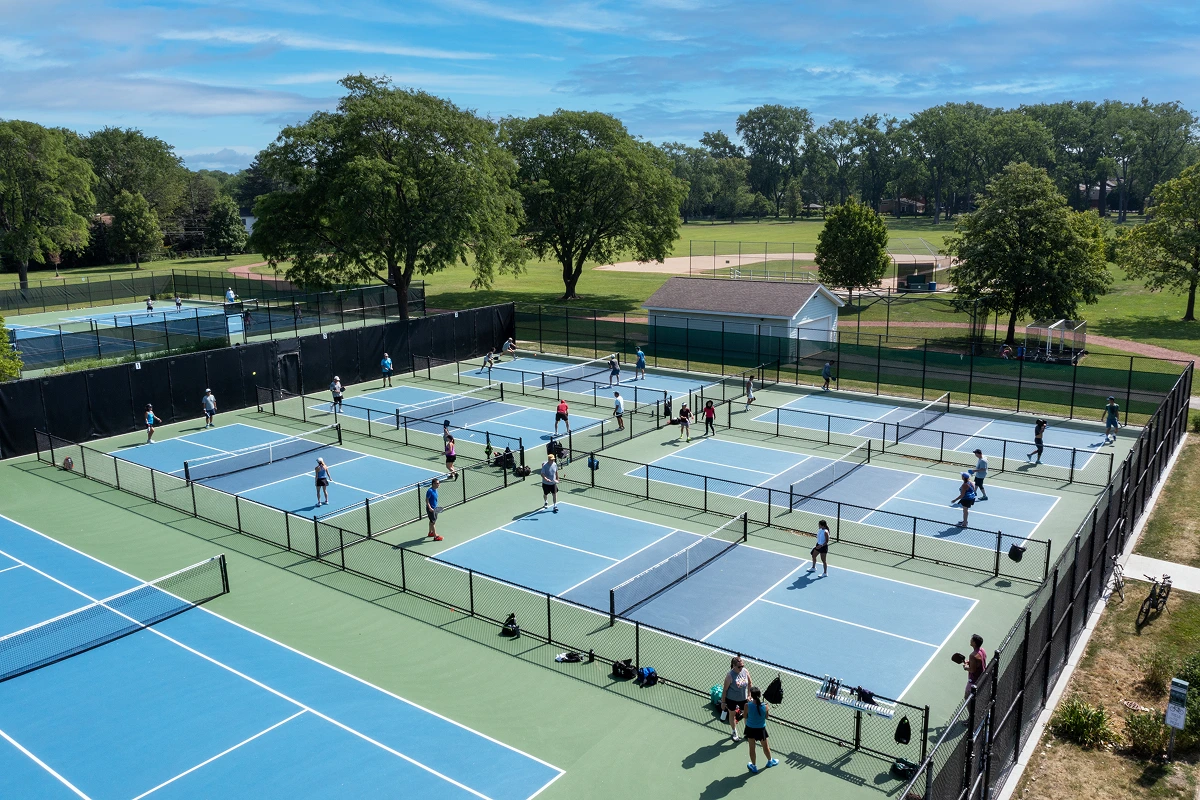
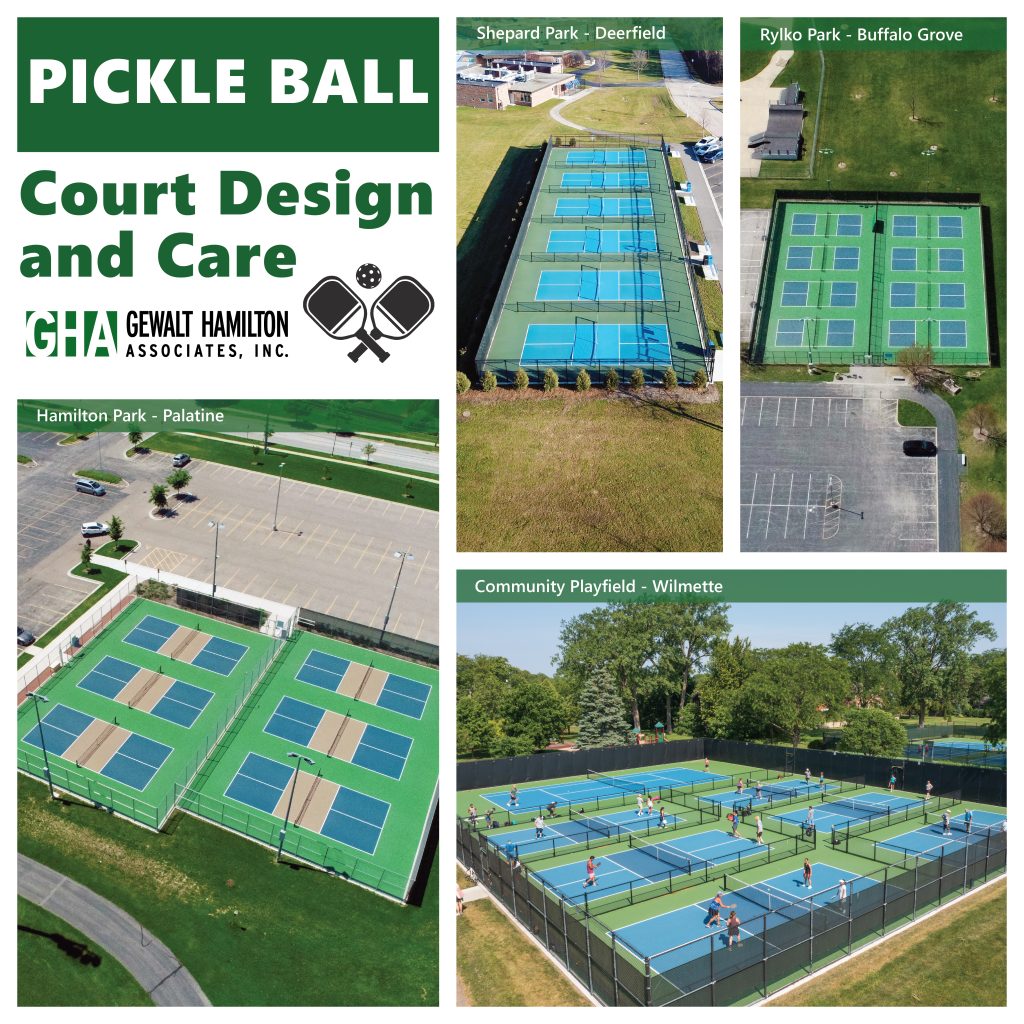
Pickleball, a sport blending elements of tennis, badminton, and ping-pong, has surged in popularity recently, capturing the enthusiasm from communities all across the United States. The sport’s unique appeal is enhanced by the social aspect and accessibility it offers, encouraging play among all ages and skill levels. As the number of enthusiasts grows, so does the demand for high-quality, durable pickleball courts. The design and construction of these courts require careful attention to detail to verify they meet playability and safety standards while withstanding local climate.
Design Considerations for Pickleball Courts
Court Placement and Site Design
Selecting the correct site and designing courts properly is foundational to creating optimal play conditions. In regions like Illinois, understanding and addressing soil conditions and grading is necessary to maintain courts that are flat, structurally sound, and capable of accommodating the area’s changing climate. Integrating stormwater management practices and complying with floodplain regulations is essential, as these measures protect the court surface from water damage and preserve its integrity over time. Thorough geotechnical investigations are important for gaining a complete understanding of the subsurface conditions. The results of these investigations significantly influence every aspect of the court’s construction, from drainage systems to pavement design.
Specific Design Features
-
Dimensions and Orientation
Ideally, pickleball courts are oriented north to south to minimize sun interference, which can significantly affect visibility and gameplay at certain times of the day. To maintain consistent play conditions, the court is designed with standard dimensions of 44 feet long and 20 feet wide, including the lines. The net height is set at 36 inches at the sidelines and 34 inches at the center, with net posts recommended to extend 12 inches outside the sidelines. The non-volley zone extends 7 feet from the net on either side, with recommended line widths of 2 inches.
-
Lighting Solutions
Proper lighting is desirable for pickleball courts to ensure they are usable after sunset or in low-light conditions. High-quality, well-placed lighting should extend playing time, improve visibility, and provide consistent gameplay. Lights should be tall enough to illuminate the entire court evenly, reducing shadows and glare. Advanced lighting systems with timers and controls can help manage energy use, ensuring that lights are only on when needed. For example, facilities like the tennis courts at Mike Rylko Community Park in Buffalo Grove, IL, use timers that automatically turn off the lights at a set time. However, the parking lot remains lit longer for players’ safety as they leave the facility. By implementing similar lighting strategies, pickleball courts can achieve optimal playability and safety, resulting in a positive player experience into the evening.
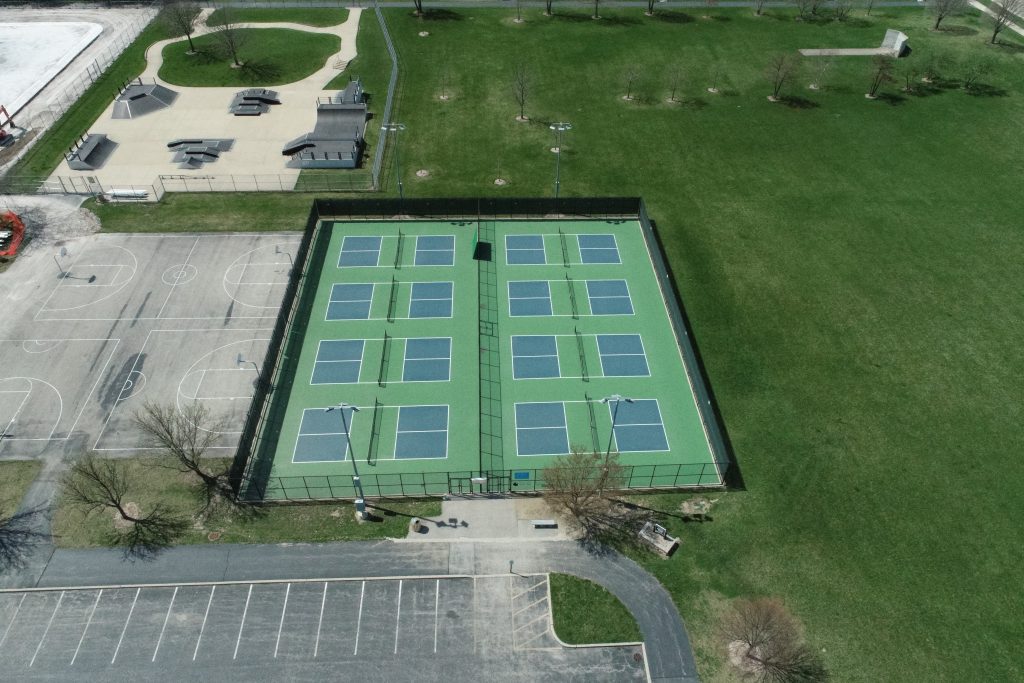
Mike Rylko Community Park in Buffalo Grove features lights on a scheduled timer to ensure player safety.
Sound Management Strategies
Minimizing noise in court areas is vital, particularly in community settings or residential areas. Effective sound attenuation can be achieved with well-planned placement of dense vegetation around the courts, which serves as a natural barrier that absorbs sound. While aesthetically pleasing, this solution requires considerable maintenance and is not immediately effective as the vegetation needs time to mature.
Alternatively, acoustic panels can be installed on fencing, but this requires the fences to be specially designed to support the additional weight and potential wind load. At about ten feet apart, standard chain link fences typically have support poles spaced too far to effectively hold sound panels. By reducing this spacing, or by increasing the pole diameter, fences can accommodate these panels and significantly reduce noise levels for nearby residents.
Seating and Spectator Areas
Seating solutions should cater to both players and spectators. Areas for spectators need to be designed with both comfort and visibility in mind. For regular play, simple and movable seating options like three-row bleachers offer flexibility and can be stored when not in use. For tournaments or special events, multiple bleachers can be easily deployed to accommodate larger crowds. Integrating queue areas where players can leave paddles or other markers to hold their place in line makes it easier for players to manage participation during peak times, enhancing the facility’s efficiency and organization.
Fence Design and Court Dividers
Properly designed fences are key to the containment of play and security. The height and material of the fences should meet established guidelines, ensuring they are suitable for the specific requirements of pickleball courts. Baseline fences are typically 8 feet high, but can reach up to 10 feet for certain conditions. Sideline fences can vary in height, often between 3.5 and 8 feet, depending on their location and purpose. Court dividers are particularly important in facilities with multiple courts as they minimize game interference from adjacent courts. A lightweight, built-in chain link divider is often preferred for its durability and ease of integration into the overall design. It also maintains the aesthetic uniformity of the facility, compared to temporary dividers that players might bring themselves.
Incorporating these design features effectively addresses both the practical and aesthetic requirements of pickleball court construction, ensuring a functional and enjoyable environment for players and spectators alike.
Pickleball Court Construction and Material Considerations
The construction phase of pickleball courts encompasses a series of careful processes, from subgrade preparation to the final surface applications. Each step is crucial in ensuring the longevity, safety, and playability of the courts.
Subgrade and Foundation
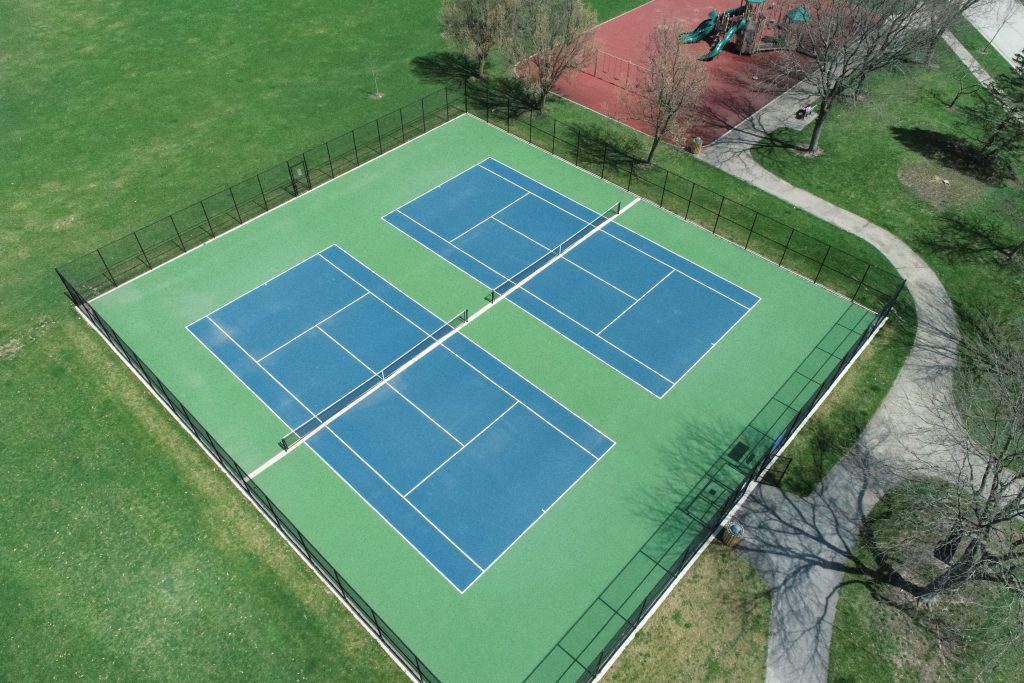
Canterbury Park in Buffalo Grove, featuring a box curb poured along the fence foundation, 12 inches below grade.
The durability and performance of a pickleball court heavily rely on the stability of its subgrade and foundation. Freeze-thaw cycles present significant challenges, making durable pavement designs necessary. Using geogrids that extend beyond the court’s perimeter helps to stabilize the subgrade, mitigating potential settlement differential.
Similar principles are applied across various sports court constructions, exemplified by the tennis courts at the Canterbury Park project in Buffalo Grove. A box curb was poured along the fence foundation, 12 inches below grade, to improve stability and allow for adjustments before the concrete sets. Careful coordination among subcontractors is required for proper alignment. Such methods are equally beneficial and adaptable for pickleball court installations, ensuring long-term durability and ease of upkeep.
Paving and Surface Choices
Asphalt remains a popular choice for its cost-effectiveness and ease of maintenance. However, for areas with poor soil conditions or heavy use, post-tension concrete is a more durable alternative. It can bridge potential cracks and provide a consistently flat playing surface, as proposed for a project in Lake Forest where challenging ground conditions are anticipated. The next step in planning for a high-quality court involves applying color coating systems.
This process begins with flooding the court to test for levelness and proper drainage. By doing so, any low spots or drainage issues can be identified and corrected before the final coating is applied. Ensuring that the surface is smooth and drains properly is crucial, as it prevents water accumulation that can lead to surface damage and uneven play conditions. Once any potential issues are addressed, the color coating can be applied, providing a smooth, durable surface that resists wear and tear while offering optimal traction and visibility for players.
Advanced Materials and Quality Control
Incorporating innovative materials such as GlasGrid for pavement reinforcement enhances the durability and structural integrity of the courts. This material is known for its high tensile strength and resistance to environmental factors, making it an ideal choice for pickleball court construction. Material testing and verification confirm that all materials meet specified quality standards. The quality control process guarantees that each component used in the court’s construction contributes to its overall durability and performance. This involves checking the materials and ensuring that the installation procedures maintain the dependability of these high-quality components.
Drainage Solutions
Effective drainage solutions are integral to maintaining the court’s condition and usability. To maintain optimal drainage and prevent standing water damage, specific construction practices are employed. These include strategically placed underdrains and careful grading that efficiently direct water away from the playing surface.
Effective Pickleball Court Maintenance Strategies
Maintaining a pickleball court is essential to prolong their lifespan and ensure they continue to provide a safe and enjoyable playing experience. Effective maintenance strategies include routine care and preventive measures that address wear and tear before they escalate into costly repairs.
Routine and Preventive Maintenance
-
Seasonal Care
Seasonal preparation and upkeep are essential for maintaining pickleball courts in response to changing weather conditions. In climates like Illinois, where winters are harsh, it’s crucial to prepare courts for cold weather by removing any equipment that might be damaged by snow and ice, such as nets and windscreens. Freeze-thaw cycles can move the net posts and change the net height, making it important to inspect and adjust these elements. These items should be stored properly to prevent degradation from the elements. Before winter sets in, it’s important to confirm that all surface water is adequately drained to prevent freezing and subsequent cracking of the surface.
When spring arrives, a thorough inspection of the court surface and surrounding areas should be conducted to assess any damage that may have occurred during the colder winter months. Cracks should be filled, and surfaces cleaned to remove debris that might cause slips and falls. Regular sweeping of the court prevents the buildup of dirt and debris, maintaining the surface texture and flatness and reducing the risk of damage or accidents.
-
Annual Maintenance Tasks
Addressing the wear and tear from regular use is a key aspect of annual maintenance. This includes filling joints and patching any small areas of damage to prevent moisture infiltration and further deterioration. It is important that these repairs are completed by a contractor certified in applying the surface products and supported by the manufacturer. Applying a fresh coat of acrylic resurfacing material every few years acts as a protective layer against moisture and UV rays, while also restoring the court’s texture and appearance and enhancing the playing experience.
Addressing Common Pickleball Court Failures
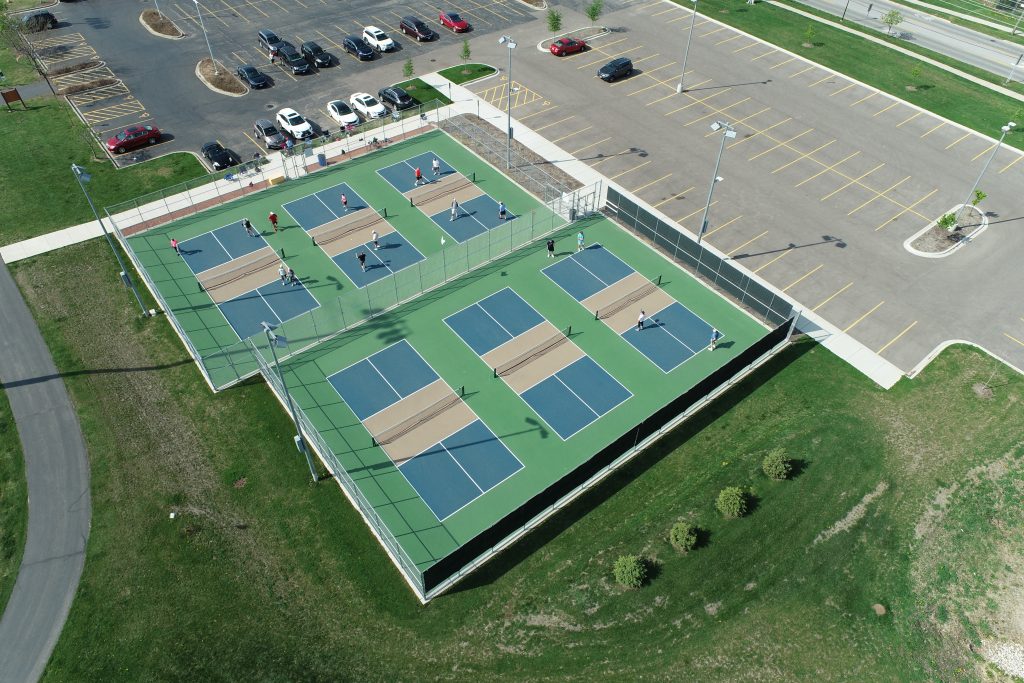
Tom T Hamilton Park – Palatine, IL
-
Structural and Surface Integrity
Reflective cracking and instability of fence posts are common issues that arise from ground movement and poor initial installation. Regularly inspecting and securing the fence posts helps maintain the safety and stability of the court. A proactive approach to surface care is essential; early sealing of cracks prevents water from seeping into the base material, which can lead to more extensive damage from freeze-thaw cycles.
-
Surface Alligatoring
Alligatoring, characterized by a series of small cracks that resemble an alligator’s skin, is indicative of sub-surface failures and can be prevented by ensuring that the subgrade is properly tested during the initial construction. Regular monitoring for signs of sub-surface failure can help in taking timely action to prevent alligatoring. This includes conducting periodic visual inspections and checking for early signs of cracking.
-
Wind Load Failures on Fencing
In windy areas, fences can suffer from wind load stresses that may cause leaning or even a collapse. Reinforcing fence posts and ensuring that they are deeply anchored can reduce this risk. Using wind-resistant materials, such as reinforced steel or heavy-duty aluminum, and designs like angled supports or windbreak panels, also helps in reducing the impact of strong winds on fencing structures.
-
Subgrade and Drainage Issues
Proper drainage is crucial for maintaining the structural integrity of pickleball courts. Perimeter underdrains can mitigate heaving or settling of the court surface and fence foundations, maintaining a level playing field.
Effective Strategies and Tools
Implementing a regular maintenance schedule that includes both routine and in-depth checks is vital for the longevity of pickleball courts. Utilizing the right tools and materials for minor repairs can save significant costs and downtime in the future. Training maintenance staff on the specific needs of pickleball courts means that they are able to identify and address problems early, keeping the facility in top condition.
By following these comprehensive design and maintenance strategies, facility owners can ensure that their pickleball courts remain a beloved asset. These courts will provide a safe and enjoyable environment for all players throughout the year and will also contribute to the community’s overall health and well-being. Investing in quality construction and diligent upkeep guarantees the longevity of the courts, creating a space where people of all ages can come together, stay active, and build lasting connections
GHA’s Project Management and Oversight
Gewalt Hamilton Associates (GHA) prides itself on delivering exceptional quality during the design and construction of sports facilities, including pickleball courts. GHA’s project management and oversight approach is thoughtfully crafted to handle the unique challenges these projects present, ensuring that every court built meets both the functional needs of players and the long-term desires of the community.
Comprehensive Project Management Approach
-
Initial Planning and Design Review
GHA begins each project with a thorough planning phase, engaging stakeholders to understand their specific needs and the community’s expectations. This includes detailed site assessments, feasibility studies, and environmental impact analyses, ensuring that any potential issues are addressed before construction begins. GHA’s design review process carefully examines each aspect of the court’s layout, materials selection, and intended usage to ensure that the final design meets all regulatory and safety standards while also optimizing for player experience and durability.
-
Construction Oversight
During construction observation, GHA maintains an on-site presence to oversee all activities and assure compliance with the project specifications and design plans. This hands-on approach helps to identify and address issues quickly, minimizing delays and potential cost overruns. GHA’s project managers work closely with contractors to verify that all work is carried out to the highest standards, with regular reporting back to the stakeholders to keep them informed of progress and any challenges that arise.
-
Quality Assurance and Control
At GHA, we follow strict quality control measures at every stage of construction. This includes regular materials testing, from subgrade composition to surface coatings and installation practices, ensuring that every layer of the court construction meets specified standards. Our approach also involves detailed inspections and continuous monitoring to address any issues that arise. By maintaining these high standards, we ensure the final product is durable, safe, and meets the expectations of our clients and the community.
-
Risk Management and Safety
Risk management is a central component of GHA’s project oversight, incorporating proactive strategies to mitigate risks associated with the construction and long-term maintenance of pickleball courts. During construction, we strictly enforce safety protocols and conduct regular safety audits to verify that all practices comply with federal, state, and local regulations. By maintaining these strict standards throughout the construction process, we guarantee that the finished facility is safe for both construction workers and future users, providing a secure environment for the community.
Long-Term Partnership and Community Engagement
GHA views each project as the beginning of a long-term partnership with its clients and the communities they serve. By engaging with local pickleball clubs and organizations, we gather feedback that informs future projects and helps refine maintenance practices. This community-focused approach helps to keep the courts a valuable and cherished resource for all.
Our project management and construction oversight capabilities ensure that every pickleball court project is executed with precision, delivering high-quality, durable sports facilities that enhance community engagement and promote an active lifestyle.