Effective roadway design is more than moving vehicles; it’s about designing streets that support accessibility and vibrant public life while ensuring safety. Traffic calming strategies are key to achieving this balance, helping to reduce vehicle speeds and improve the overall livability of communities. As cities and suburbs continue to evolve, these solutions have become essential in transforming roadways from vehicle-dominated corridors into shared spaces for pedestrians, cyclists, and drivers alike.
Traffic calming goes beyond reducing speed; it’s about reshaping how streets function within communities. Recently, design priorities have shifted from facilitating vehicle movement to creating spaces where people can comfortably walk, cycle, and engage with their surroundings, a trend especially visible in central business districts and village downtowns. This shift has been accelerated in recent years by changing societal needs, particularly during and after the COVID-19 pandemic, when public spaces were reimagined to support outdoor activities and social distancing.
Narrowing lanes, adjusting corner radii, and incorporating green spaces are all traffic calming interventions designed to influence driver behavior in ways that prioritize safety and improve the experience of all road users. By making streets more walkable and inviting, these strategies help foster a “sense of place,” encouraging community interaction and making neighborhoods more appealing.
The Principles of Traffic Calming
Successful traffic calming relies on foundational principles that define how streets function and how road users interact with them. By applying these principles, environments are created that intuitively reduce vehicle speeds and improve accessibility for all users. The result is a more cohesive streetscape that enhances the overall experience for everyone who uses it.
Reducing Speeds for Safety
Speed is a critical factor in road safety. The likelihood and severity of accidents increase sharply with vehicle speed, highlighting the need to design streets that naturally encourage drivers to slow down. Research from the AAA Foundation for Traffic Safety shows that a pedestrian has a 10% risk of death when struck by a vehicle traveling at 23 mph, a 50% risk at 42 mph, and a 90% risk at 58 mph. Stopping distance also increases significantly with speed; at 20 mph, a driver needs approximately 63 feet to stop, but this distance more than doubles to 164 feet at 40 mph (Vision Zero Chicago).
According to the World Health Organization (WHO), an increase in average speed of just 1 mph leads to a 3% rise in the likelihood of a crash involving injury and a 4-5% increase in the likelihood of a fatal crash. These statistics highlight the importance of designing streets that naturally encourage slower speeds, reducing the frequency and severity of accidents.
Enhancing Livability and “Sense of Place”
Beyond safety, traffic calming also plays a role in improving the livability of streets. By prioritizing pedestrian and cyclist needs and creating more inviting spaces, traffic calming contributes to a stronger sense of place. Features like curb extensions, green spaces, and street furniture can transform a street from a utilitarian corridor into a community asset. These elements not only slow down traffic but also make streets more visually appealing while encouraging greater use by pedestrians, promoting a healthier and more engaged community.
According to data from Vision Zero Chicago, vulnerable road users—defined as pedestrians, cyclists, and others who are not protected by the frame of a vehicle—face a much higher risk of fatal or serious injury in traffic crashes. Pedestrians are 12 times more likely to be killed or seriously injured in a traffic crash than people inside vehicles, and cyclists are 5 times more likely to face similar outcomes. These statistics show the critical need for traffic calming measures that prioritize pedestrian and cyclist safety, ensuring that all users are accounted for in street design.
Balancing the Needs of All Users
Thoughtful street design considers the needs of all road users, not just drivers. Traffic calming involves creating a more equitable allocation of space, ensuring that pedestrians and cyclists feel as safe and accommodated as those in vehicles. This might involve implementing dedicated bike lanes, expanding sidewalks, or installing pedestrian refuge islands. Thoughtfully designed streets can create environments that encourage safer, slower travel while accommodating a variety of transportation modes.
Encouraging Mode Shift and Reducing Vehicle Dependence
Encouraging a transition away from car dependency is essential to creating more balanced and sustainable transportation networks. By making walking, cycling, and public transit more attractive options, traffic calming strategies support the goal of reducing reliance on cars and promoting healthier, more environmentally friendly modes of travel. With the growing interest in sustainable and active transportation modes, traffic calming solutions must support this trend by designing streets that balance the needs of both vehicle and non-vehicle users.
COVID-19 accelerated this transition as communities sought outdoor, socially distanced options like expanded pedestrian zones and cycling networks. Traffic calming measures that support these alternatives not only foster more active modes of transportation but also contribute to cleaner air, reduced noise pollution, and a healthier urban environment. By encouraging walking and cycling, these designs help lower vehicle emissions and promote physical activity, aligning with broader public health initiatives and environmental sustainability goals.
Design Strategies for Traffic Calming
Traffic calming comes to life through design strategies that reshape how drivers interact with the roadway and encourage safer behaviors. These strategies modify the physical environment to require more precise vehicle maneuvering, naturally leading drivers to reduce their speed, while promoting a more balanced use of the roadway among drivers, pedestrians, and cyclists.
Roadway Narrowing and Lane Width Reduction
Reducing lane width is one of the simplest yet most effective ways to slow vehicle speeds. Standard lane widths of 12 feet can be reduced to 10 feet or even narrower, depending on the context, without compromising safety. Narrower lanes create a sense of confinement that encourages drivers to reduce speed. In urban environments, repurposing excess road space for bike lanes, wider sidewalks, or landscaping can further enhance pedestrian and cyclist safety while maintaining efficient vehicle flow.
Corner Radii Adjustments
The size of a corner radius directly affects vehicle turning speeds. Larger radii allow for faster turns, which increases the risk of pedestrian collisions. By minimizing corner radii—often down to as little as 5 feet in urban areas—turning speeds can be reduced, making intersections safer for all users. Smaller radii also bring pedestrians and cyclists into view sooner, allowing drivers more time to react appropriately.
Curb Extensions, Pinch Points, and Chicanes
Curb extensions, also known as bump-outs, narrow the roadway at intersections or mid-block crossings, reducing the distance pedestrians need to cross. Pinch points, which involve narrowing the roadway at specific locations, similarly encourage drivers to reduce speed by creating a constricted space that requires more focused driving. These pinch points can be paired with raised medians or landscaping to further enhance visibility and pedestrian safety. Features like chicanes, which create an S-shaped path, work together with other elements to introduce horizontal shifts that encourage drivers to slow down.
Pedestrian Refuge Islands and Medians
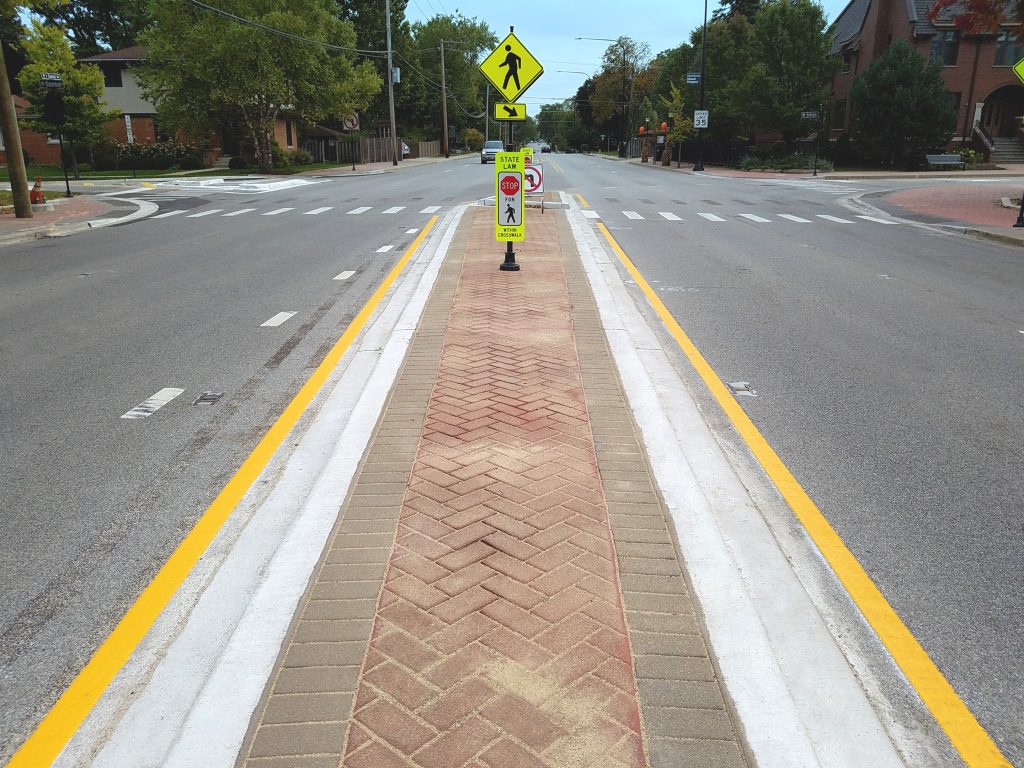
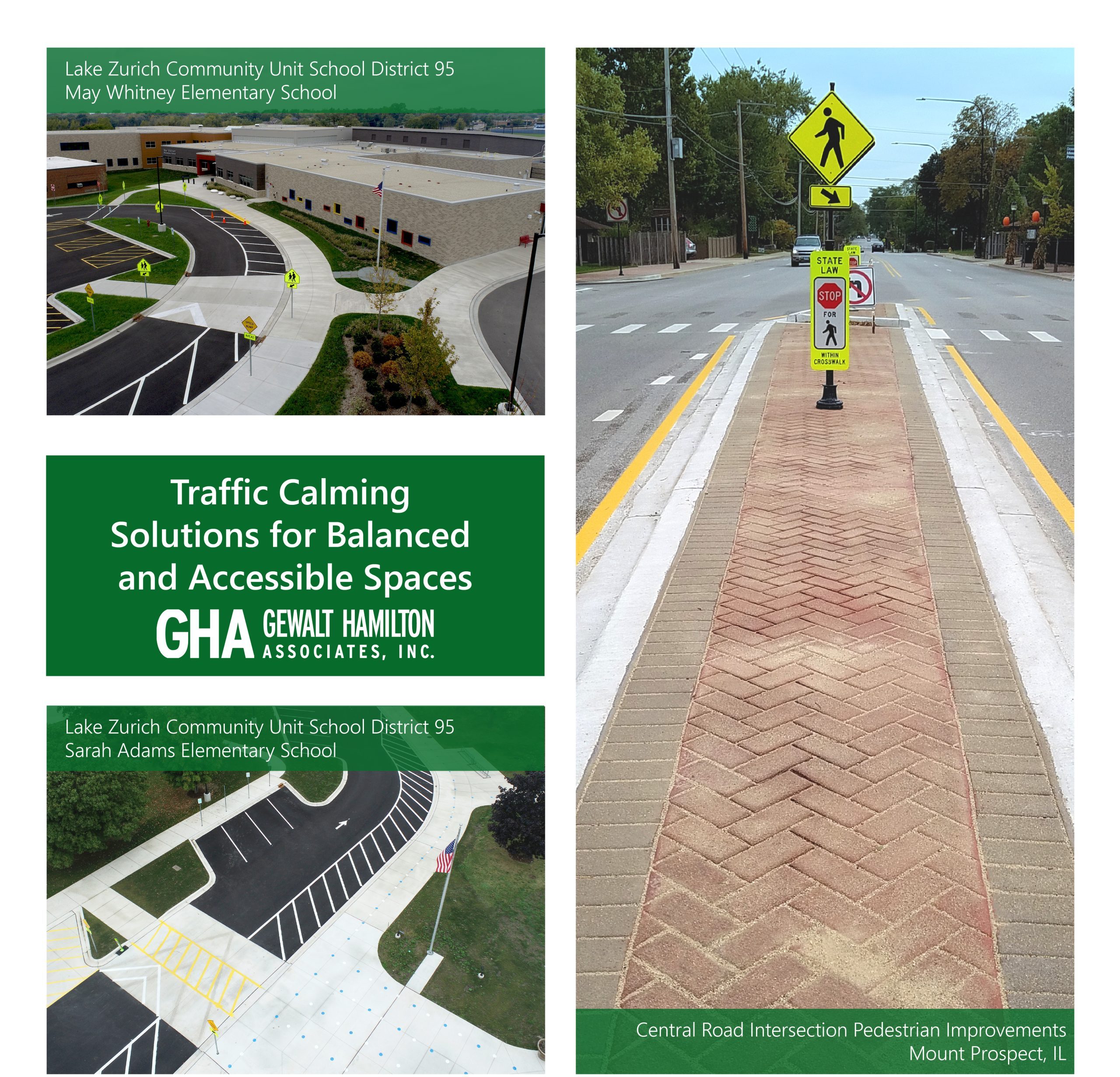
Example of Pedestrian Refuge Island at Central Road in Mount Prospect, IL
Pedestrian refuge islands are effective on streets with multiple lanes or higher traffic volumes. These islands provide a safe waiting area midway through the crossing, allowing pedestrians to focus on one direction of traffic at a time while also increasing the visibility of pedestrians waiting within the median to cross. When combined with raised crosswalks or speed tables—both of which elevate the crossing to the level of the sidewalk—they force vehicles to reduce speed when approaching. Raised crosswalks serve as both a crossing point and a speed control device, while speed tables are longer, flat-topped versions designed to slow vehicles over a greater distance. Both can also assist in meeting ADA compliance, particularly for challenging curb ramp designs.
Passive Controls
Passive controls are another approach to managing traffic flow and enhancing safety, particularly in urban and residential areas. These controls include One-Way Street signs, Turn Prohibitions, and Stop signs, which rely on signage rather than physical modifications to the roadway. Passive controls are advantageous in that they can be enforced selectively at specific times of the day, providing flexibility without constraining emergency vehicles or adding physical barriers.
However, passive controls come with certain limitations, as they depend on driver compliance and may be ignored by some drivers, reducing their overall effectiveness. Despite this drawback, passive controls offer a valuable, low-impact solution for managing traffic flow, especially in areas where physical modifications may not be feasible.
Mini Roundabouts/Traffic Circles
Mini roundabouts are effective for low-traffic intersections, especially in residential neighborhoods. Unlike traditional roundabouts, mini roundabouts can be implemented with minimal space and are ideal for slowing down vehicles in areas where pedestrian and cyclist safety is a priority. They require drivers to navigate tight turns at low speeds, reducing conflict points and improving visibility for all road users.
These design strategies are especially effective when integrated with green infrastructure, creating streets that influence driver behavior while promoting a more sustainable and aesthetically pleasing environment.
Integrating Green Infrastructure and Aesthetics
Incorporating elements like bioswales, rain gardens, and pervious pavement into street designs helps create multi-functional spaces that manage stormwater, reduce the urban heat island effect, and improve overall community well-being. These features contribute to a more inviting environment that naturally slows down traffic while providing additional benefits to the neighborhood.
Bioswales and Rain Gardens
Bioswales and rain gardens are effective solutions for managing stormwater runoff in urban environments. Positioned strategically within curb extensions, medians, or along the edges of roadways, these features allow water to infiltrate the ground naturally, reducing the strain on municipal drainage systems. When vegetated with native plants and grasses, bioswales also contribute to the aesthetic quality of the streetscape, providing visual cues that encourage slower driving speeds while enhancing the overall appeal of the area. These natural elements beautify the space and signal to drivers that they are entering a shared, pedestrian-friendly zone, while also working in harmony with other traffic calming features to improve both safety and aesthetics.
Pervious Pavement and Pervious Strips
Pervious pavement and strips serve a dual purpose: they allow water to permeate through the surface while reinforcing the intent of traffic calming measures. Whether used in conjunction with chicanes, bulb-outs, or along bike lanes, pervious materials help define spaces intended for non-vehicular use. Their rougher texture provides a subtle auditory cue for drivers, encouraging them to reduce speed. Pervious materials can also be integrated into curb extensions and other traffic calming features, offering both stormwater management and a visually cohesive streetscape that promotes slower, safer driving. The eco-friendly nature of pervious surfaces aligns with broader goals of sustainable urban design by promoting groundwater recharge and reducing the risk of flooding.
The Psychological Impact of Green Infrastructure on Traffic Behavior
Research shows that green infrastructure can influence driver behavior by reducing stress and encouraging more cautious driving. Streets lined with trees, planters, and vegetation create a sense of enclosure, which naturally signals drivers to slow down. Studies from the Federal Highway Administration (FHWA) indicate that tree-lined streets can reduce vehicle speeds by 3-5 mph, while also improving pedestrian safety and comfort. This calming effect is especially important in residential neighborhoods and areas with high pedestrian traffic, where the goal is to create a low-stress environment for all users.
The integration of green infrastructure into traffic calming designs demonstrates that streets can serve multiple functions beyond vehicle movement. By enhancing the aesthetics of streetscapes while addressing environmental concerns like stormwater management, these features contribute to a more sustainable, resilient, and community-oriented public space.
Traffic Calming in Action: Case Studies and Best Practices
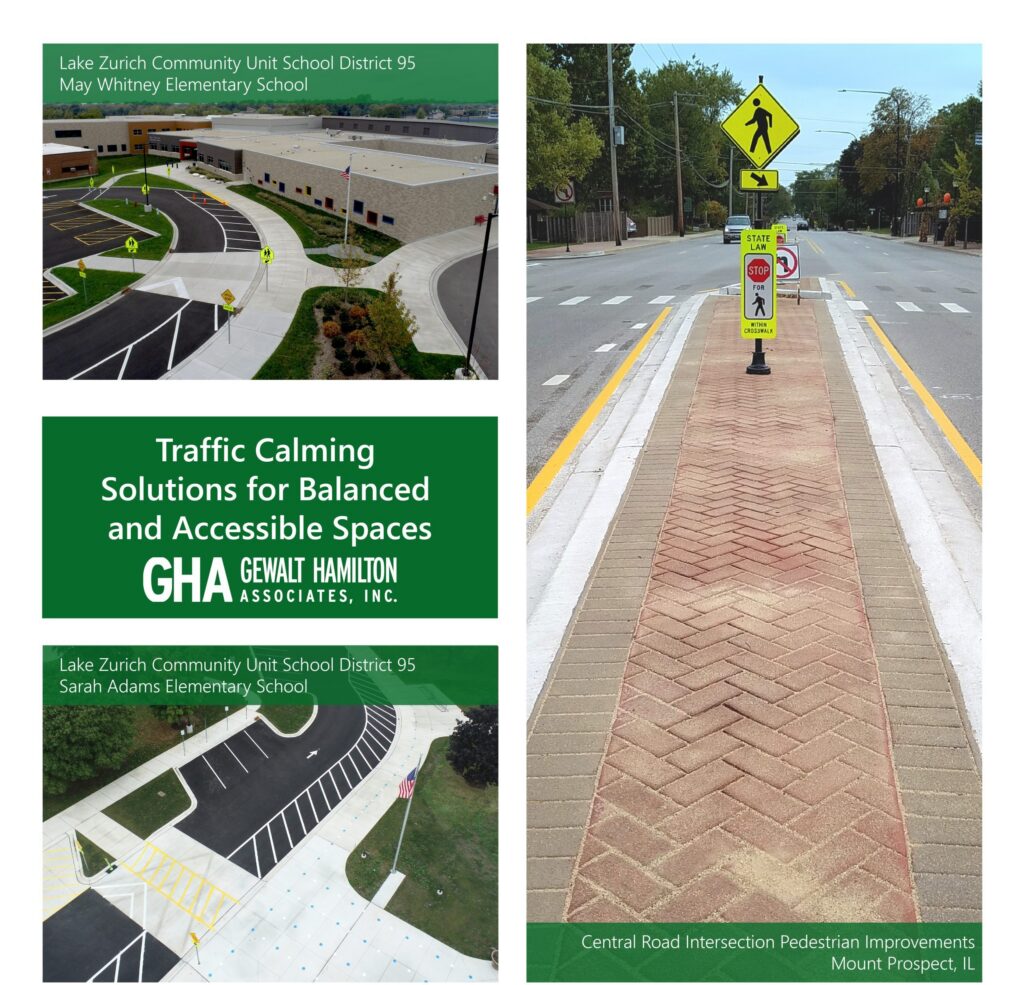
Traffic calming solutions can be tailored to address the specific needs of diverse communities. Several schools in the Lake Zurich Community Unit School District 95 have implemented a range of traffic calming measures as part of projects led by Gewalt Hamilton Associates (GHA) to enhance safety and improve traffic flow in school zones.
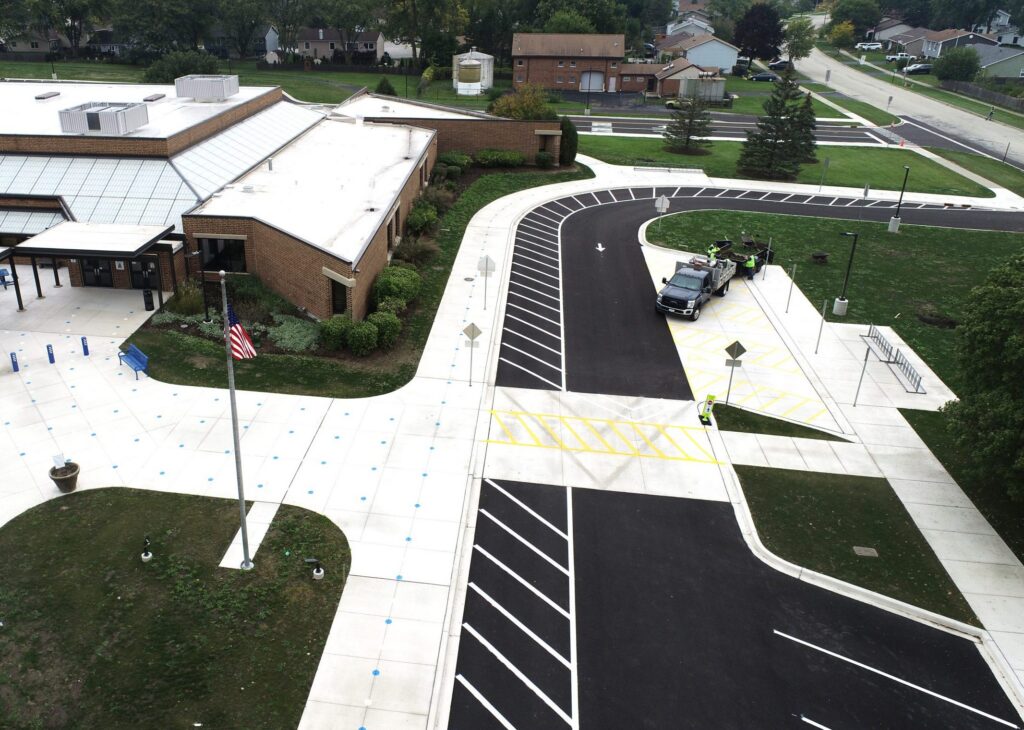
A raised crosswalk for Sarah Adams Elementary School in Lake Zurich, IL
Case Study: District 95 School Traffic Calming Projects
District 95 implemented a range of traffic calming measures across several school campuses to support safety and streamline traffic flow. A key feature of these projects was the installation of speed tables and raised crosswalks, designed to slow vehicles and prioritize pedestrian movement in areas with high foot traffic. Speed tables create vertical deflections in the roadway that help reduce vehicle speeds, particularly near schools, promoting a safer environment for students and pedestrians. Raised crosswalks further enhance pedestrian safety by increasing visibility and establishing clear crossing points.
Access management strategies were also implemented, including the closure of unnecessary driveways, improved sidewalk networks, and the installation of signalized crossings. Separating bus loading areas from parent drop-off zones helped to reduce congestion and improve traffic flow during high-traffic periods.
Case Study: Lane Narrowing and Pedestrian Safety in Chicago
In dense urban environments, lane narrowing has been a key strategy for improving pedestrian safety. In Chicago, many streets were redesigned with 10-foot lanes instead of the standard 12-foot lanes, especially in areas with high foot traffic. This narrowing not only reduced vehicle speeds but also allowed for wider sidewalks and bike lanes. The additional space allocated to non-vehicular uses created a more balanced streetscape, encouraging walking and cycling while maintaining necessary vehicle flow.
Lessons Learned: Adapting Traffic Calming Strategies to Local Contexts
One of the key takeaways from successful traffic calming projects is the importance of adapting strategies to the specific needs of the area. For instance, while mini roundabouts work well in low-traffic residential areas, denser urban environments may benefit more from lane narrowing or chicanes. Similarly, in neighborhoods with high pedestrian volumes, curb extensions and raised crosswalks can enhance safety without significantly disrupting vehicle flow. The success of any traffic calming intervention depends on a thorough understanding of the local context and the active involvement of community stakeholders.
The Role of Community Engagement and Collaboration
Input from residents, business owners, and other community stakeholders is crucial to successful traffic calming projects. Engaging with the public early in the planning process helps identify key concerns and build support for proposed measures. When communities are actively involved in the design and implementation of traffic calming initiatives, the outcomes are more likely to meet the needs of all users and gain broader acceptance.
Following up with the community after implementation is equally important. Providing updates on the success of traffic calming measures demonstrates the value of the investment, strengthens the credibility of the project, and allows for addressing any new concerns that may arise. This ongoing communication helps build trust and ensures that the measures continue to meet the evolving needs of the community.
COVID-19 and the Shift in Public Right-of-Way Usage
The COVID-19 pandemic had a profound impact on how communities use public space, prompting a reevaluation of the traditional prioritization of vehicles in urban design. As people sought safer ways to socialize, dine, and exercise outdoors, cities around the world repurposed streets to accommodate these needs. This temporary shift quickly revealed the potential for permanent changes in how streets are designed and used. Traffic calming, once focused primarily on safety and speed reduction, evolved to also address the newfound demand for more flexible, multi-use public spaces.
Reimagining Streets as Public Spaces
In response to the pandemic, many cities transformed their streets into flexible spaces that prioritized pedestrians, cyclists, and outdoor activities. Streets once dominated by vehicles became vibrant, multi-use public spaces that accommodated social distancing and new forms of community interaction. In many cases, these temporary interventions proved so successful that they became permanent fixtures. This shift emphasized the importance of creating streets that can serve multiple functions and adapt to changing community needs.
Modal Shift and the Rise of Active Transportation
COVID-19 also accelerated the growing demand for alternative modes of transportation. With more people opting for walking and cycling as safer, socially distanced options, cities responded by rapidly expanding bike lanes, pedestrian zones, and other infrastructure that supports active transportation. Traffic calming measures played a key role in this transition by creating safer environments for these users. Strategies like lane narrowing, curb extensions, and protected bike lanes made non-vehicular travel more appealing and accessible, while also calming traffic.
Long-Term Changes in Prioritizing Public Right-of-Way
The pandemic shifted the public’s perception of what streets could be used for. Where once the focus was primarily on facilitating the efficient movement of vehicles, there is now a broader recognition that streets can be designed to prioritize a variety of activities. This change in mindset aligns closely with the principles of traffic calming, which emphasize creating spaces that balance the needs of all users.
Expanding the Role of Traffic Calming Post-COVID
Designing streetscapes that are adaptable and resilient will make the role of traffic calming even more pivotal as cities evolve. The success of reimagining streets during the pandemic offers a blueprint for future developments that prioritize human-centered design. For example, New York City’s “Open Streets” program transformed over 100 miles of streets into pedestrian-friendly spaces, allowing outdoor dining, walking, and recreation. Similarly, San Francisco’s “Shared Spaces” initiative turned sidewalks, parking spaces, and streets into vibrant areas for dining and socializing, leading to permanent changes that expanded public spaces for non-vehicular use.
In Chicago, the “Chicago Alfresco” program was introduced out of necessity during the pandemic to provide businesses with safer outdoor spaces for dining and gathering. Due to its popularity and the positive effects on public space usage, the program was extended and expanded, turning streets and sidewalks into flexible, community-oriented spaces. This initiative highlighted the lasting potential for reimagined streetscapes that accommodate pedestrians and outdoor activities.
GHA’s Approach to Traffic Calming Solutions
As communities increasingly prioritize safety, accessibility, and livability, the role of traffic calming in urban and suburban planning has become more critical. Gewalt Hamilton Associates (GHA) brings expertise in designing and implementing traffic calming solutions that meet community needs while addressing the complexities of modern infrastructure. Our approach combines a deep understanding of local contexts with proven strategies to deliver streetscapes that are not only safer but also more inviting and functional.
A Proven Track Record in Traffic Calming Projects
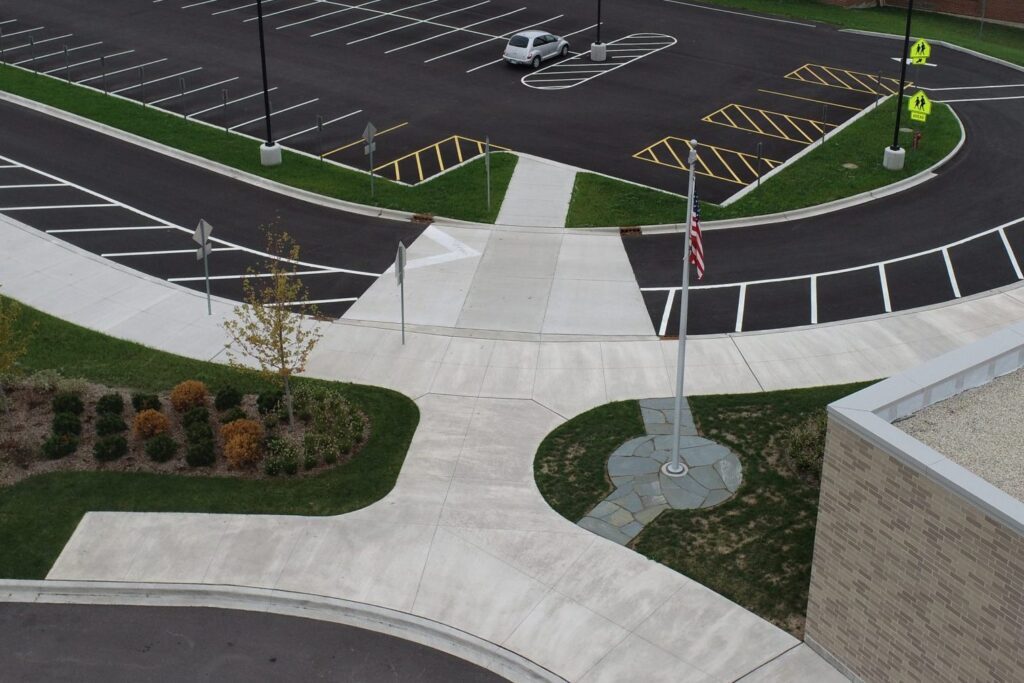
Example of a raised crosswalk for Lake Zurich School District 95 in Lake Zurich, IL
GHA has successfully completed numerous traffic calming projects in all markets, tailoring each approach to meet the unique challenges of the area. Our work includes projects in school zones, such as those in District 95, as well as municipalities and private developments. By integrating elements like speed tables, raised crosswalks, and lane narrowing, we’ve contributed to efforts aimed at reducing vehicle speeds, improving pedestrian visibility, and supporting safer, more balanced public spaces.
A Comprehensive Methodology: From Planning to Implementation
Our process begins with a thorough analysis during the Phase I study, where we work closely with stakeholders to understand the purpose and desired function of the road. We evaluate factors like traffic volume, pedestrian and cyclist patterns, and existing infrastructure to determine the most effective traffic calming measures. Following the planning phase, GHA is able to manage the full scope of the project, from preliminary design through construction.
Customizing Solutions for Each Community’s Unique Needs
No two communities are the same, and GHA’s approach reflects this understanding. From suburban streets that require a more family-friendly environment to urban thoroughfares needing improved pedestrian safety, our solutions are customized to the specific context. In areas with significant pedestrian activity, curb extensions, raised crosswalks, and enhanced landscaping are prioritized to create inviting, pedestrian-focused spaces. In higher-speed corridors, lane narrowing, chicanes, and strategically placed medians are key tools in reducing speeds and improving safety.
Integrating Green Infrastructure and Sustainable Practices
Sustainable design practices play a crucial role in making traffic calming solutions more effective. Our designs incorporate green infrastructure elements like bioswales, rain gardens, and pervious pavements to manage stormwater, reduce heat islands, and enrich the overall streetscape. By blending these features into our traffic calming designs, we deliver multi-functional solutions that address both safety and sustainability goals.
Collaborating with Stakeholders for Effective Outcomes
Successful traffic calming requires a collaborative approach. GHA works closely with local governments, community groups, and residents to ensure that the final design reflects the needs and desires of those who will use the streets. While public buy-in can sometimes be challenging—particularly when proposed solutions may impact personal commutes or travel patterns—our process emphasizes early engagement to address concerns and build understanding. By involving stakeholders from the outset, we can foster greater acceptance and generate consensus for the proposed solutions, leading to smoother implementation and better long-term results.
GHA’s approach to traffic calming is centered on providing practical, sustainable solutions that promote safer, more accessible streets. Through a combination of technical expertise, creative design, and stakeholder collaboration, we help municipalities create streets that are safe, inviting, and reflective of their unique character.
Shaping the Future of Safer Streets with GHA
As cities and suburbs continue to evolve, traffic calming will remain a crucial aspect of creating environments where all users—whether on foot, on a bike, in a vehicle, or using scooters, e-bikes, and other personal mobility devices—can coexist safely. The shift toward balancing pedestrian spaces, integrating green infrastructure, and reducing vehicle speeds reflects a broader recognition that streets serve more than just traffic flow; they are essential public spaces that shape the character and quality of life in our communities.
We understand that effective traffic calming goes beyond applying technical solutions. It’s about envisioning streets that serve everyone while addressing the unique challenges of each community. By combining proven design principles with a tailored approach, we help municipalities transform their streets into safer, more inviting spaces that encourage active transportation and foster a sense of place.
As communities increasingly focus on safety, sustainability, and quality of life, the role of traffic calming will continue to grow. GHA is committed to driving this transformation by delivering innovative, practical solutions that address today’s challenges while creating adaptable, resilient environments for the future. Through thoughtful design, sustainable practices, and collaborative planning, GHA works alongside communities to shape streets that are functional, welcoming, and reflective of a shared vision for safer, more livable spaces.